+8618862309186


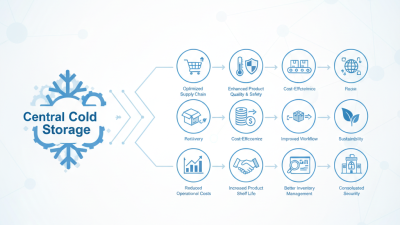
In 2026, the importance of Central Cold Storage has never been clearer for businesses worldwide. As noted by industry expert Dr. Emily Carter, “Efficient cold storage can transform supply chains and improve product quality.” Central Cold Storage provides a vital solution for companies looking to enhance their operational efficiency and keep perishable goods fresh.
Cold storage facilities are no longer just a luxury; they are essential for food safety and sustainability. Businesses can experience reduced waste and spoilage through proper temperature control. However, not every company has invested in robust systems. This is where reevaluation becomes necessary. Companies must recognize that cutting corners in cold storage can lead to significant losses.
Moreover, Central Cold Storage can streamline product distribution. With the right technology, businesses can achieve better inventory management. Yet, some firms struggle to integrate these advanced systems effectively. These challenges highlight the ongoing need for innovative solutions and expert guidance. In a rapidly evolving market, embracing Central Cold Storage is key for future growth.

Central cold storage is transforming inventory management for businesses in 2026. With precise temperature control, perishable goods maintain freshness longer. This leads to reduced waste and enhanced product quality. Companies can track inventory in real-time. This transparency allows for better decision-making on stock levels.
Moreover, businesses experience increased efficiency. Centralized storage simplifies logistics. Products can be dispatched more quickly. However, some companies struggle with integration into existing systems. Transitioning requires planning and investment. It’s a process that needs careful thought and execution.
A centralized system can also improve forecasting accuracy. Companies gain insights into demand trends. This helps in adjusting inventory levels. However, some firms may face challenges with data management. Ensuring data accuracy is crucial for effective inventory strategies. Balancing these benefits and challenges is vital for success in the cold storage landscape.

Central cold storage offers significant cost savings for businesses through economies of scale. By consolidating storage needs, companies reduce overhead expenses. Smaller businesses often struggle to maintain temperature-controlled facilities. They face high operational costs. Central storage allows them to share resources, minimizing individual expenses.
In a central cold storage setup, bulk purchasing plays a crucial role. Businesses can negotiate better prices for large quantities. This reduces costs per unit significantly. However, it requires coordination and planning. Some companies may find it challenging to sync their inventory needs. Mismanagement can lead to waste or shortages.
Moreover, central cold storage can enhance operational efficiency. It streamlines logistics and minimizes energy consumption. Yet, it may not suit every business model. Companies need to evaluate their specific needs. Individual requirements might conflict with shared resources. Careful assessment is key to maximizing benefits.
Centralized cold storage systems enhance food safety and quality control for businesses. Reports show that nearly 30% of food products spoil during transport due to temperature fluctuations. A well-established cold storage facility can mitigate these losses by maintaining a constant, optimal temperature.
With centralized systems, businesses can better monitor food conditions. Advanced technologies, like temperature sensors and alarms, provide real-time data. A 2025 industry report indicated that companies using these technologies reduced spoilage rates by up to 25%. Such systems ensure products retain their freshness longer, which is vital for consumer trust.
However, challenges remain. Many facilities still lack proper training for staff on quality control measures. Human error can lead to significant quality discrepancies. Regular audits and training programs are essential to uphold safety standards. While centralized cold storage offers clear benefits, ongoing education is crucial to maximize these advantages.
| Benefit | Description | Impact on Business |
|---|---|---|
| Enhanced Food Safety | Centralized control reduces the risk of contamination and maintains optimal storage conditions. | Decreased food spoilage and reduced health risks. |
| Improved Inventory Management | Real-time tracking of stock levels reduces waste and helps in making informed restocking decisions. | Increased efficiency and cost savings. |
| Cost Efficiency | Central cold storage can lower energy costs through bulk cooling and optimized equipment. | Higher profit margins on perishable goods. |
| Quality Control | Maintained temperature and humidity levels help preserve the quality of goods. | Enhanced customer satisfaction and repeat business. |
| Scalability | Easily expandable based on growing business needs. | Adaptable to changing market demands. |
| Improved Supply Chain Efficiency | Centralization aids coordination among suppliers and distributors, reducing lead times. | Faster service and heightened reliability. |
| Sustainability | Energy-efficient systems and practices minimize environmental impact. | Boosted brand reputation and consumer trust. |
| Centralized Data Management | Unified data storage leads to better analytics and reporting. | Informed decision-making based on comprehensive data. |
| Streamlined Operations | Consolidated storage reduces handling times and labor costs. | Improved overall operational efficiency. |
| Enhanced Customer Service | Reliable inventory access ensures timely deliveries to customers. | Customer loyalty and enhanced market share. |
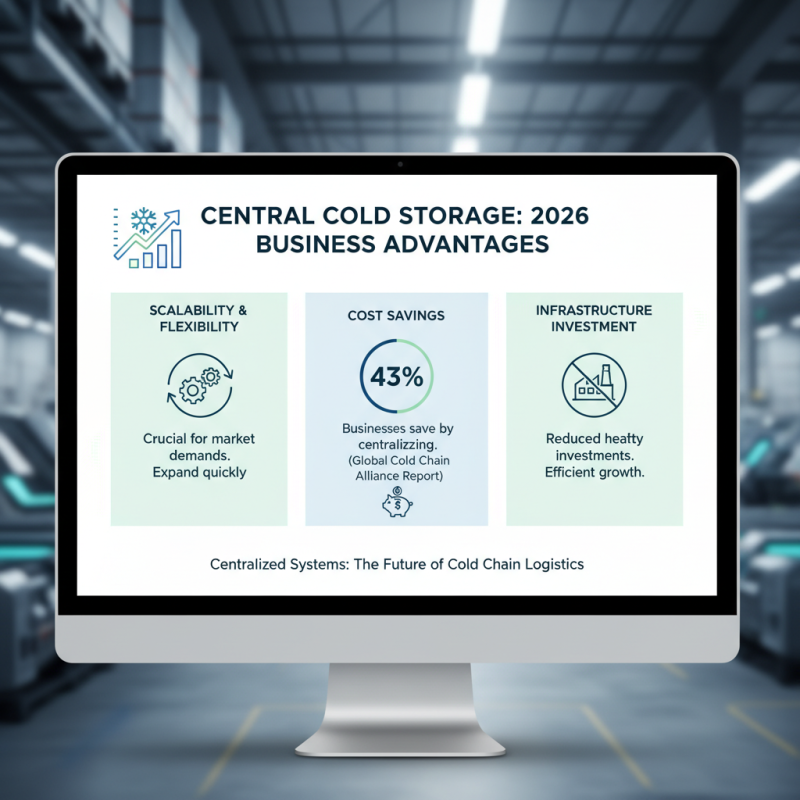
In 2026, scalability and flexibility are crucial for businesses leveraging central cold storage. Many companies are opting for centralized systems to meet the growing demands of the market. A report by the Global Cold Chain Alliance indicates that 43% of businesses have seen cost savings by centralizing their storage solutions. This method allows businesses to expand quickly without hefty investments in infrastructure.
Flexible storage options enable businesses to adapt to seasonal fluctuations. According to the Food Marketing Institute, companies utilizing central cold storage report a 30% increase in distribution efficiency. With easy access to temperature-controlled environments, businesses can scale up during peak seasons and downsize during lower demand. However, this flexibility can also lead to over-reliance on central systems, which may result in challenges during unexpected disruptions. Investing in backup systems is often overlooked, yet essential for maintaining operational continuity.
Additionally, potential challenges arise in managing inventory across centralized systems. Companies must continually evaluate and optimize their inventory management strategies. Data from the International Warehouse Logistics Association reveals that poor inventory management can waste up to 20% of resources. Businesses must navigate these complexities to ensure scalability translates into operational success.
Central cold storage solutions play a crucial role in advancing environmental sustainability. These systems enhance energy efficiency by utilizing innovative technology. They can significantly reduce energy consumption compared to individual units. Many businesses can decrease their carbon footprint with centralized operations. This has a ripple effect on the overall environment.
Using centralized systems minimizes food waste significantly. When products are stored at optimal temperatures, spoilage rates drop. This helps achieve a sustainable supply chain. Additionally, businesses reduce transportation emissions by consolidating inventory. It leads to more efficient delivery routes. However, the initial investment in technology and infrastructure can be daunting. Some businesses may not see immediate benefits.
Maintaining such a facility requires constant monitoring. Equipment failures can lead to unexpected waste. Continuous training for staff is vital to ensure efficiency. Businesses must remain vigilant to avoid pitfalls in management. Embracing central cold storage solutions is not without challenges, yet the potential benefits for the environment are compelling.