2026 Best ASRS Solutions for Global Procurement Challenges?
The landscape of global procurement is rapidly evolving. Companies face increasing challenges, ranging from supply chain disruptions to rising costs. In this context, ASRS Solutions emerge as critical tools for innovation and efficiency. Expert John Smith, a veteran in warehouse automation, emphasizes, “Effective ASRS Solutions can transform procurement strategies.”
ASRS Solutions offer automated storage and retrieval systems that streamline inventory management. These systems help reduce errors and improve order fulfillment speeds. However, they require significant investment and ongoing maintenance. Companies must carefully evaluate their needs against these costs. Integration can also pose challenges, leading to potential disruptions during implementation.
Despite these hurdles, the benefits of ASRS Solutions are compelling. They can lead to higher accuracy, reduced labor costs, and enhanced scalability. As the procurement landscape continues to change, adapting to new technologies, like ASRS, becomes essential. Nevertheless, companies should take a step back and continuously reassess their approach to implementation and operation. This reflection will ultimately lead to more effective procurement strategies in a challenging environment.

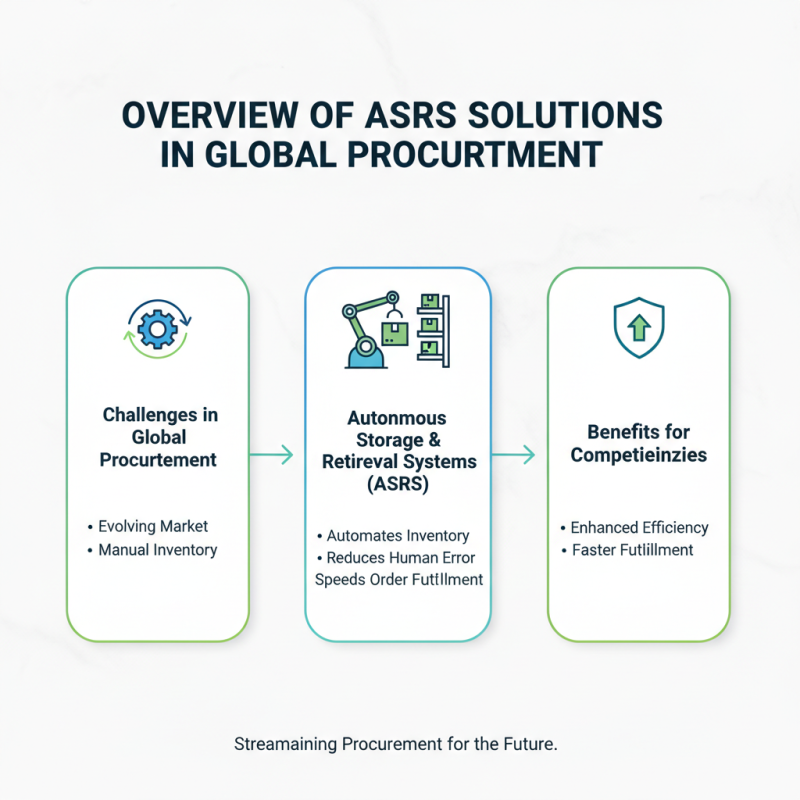
Overview of ASRS Solutions in Global Procurement
In today's rapidly evolving global market, procurement faces numerous challenges. Autonomous Storage and Retrieval Systems (ASRS) offer innovative solutions to streamline these processes. They enhance efficiency by automating inventory management. ASRS reduces human error and speeds up order fulfillment, which is crucial for maintaining competitiveness.
Implementing ASRS involves substantial investment and technical training. Many companies underestimate the complexity of integration with existing systems. A lack of understanding can lead to complications that affect performance. It's essential to evaluate the specific needs of the procurement process before committing to these advanced solutions.
Despite their advantages, there can be unexpected setbacks. For instance, power outages or technical malfunctions can halt operations. Companies need to have contingency plans in place. Regular maintenance and updates are vital to ensure reliability. Understanding these aspects can help businesses make informed decisions about implementing ASRS in their procurement strategies.
Key Features of ASRS Technology for Supply Chain Efficiency
Automated Storage and Retrieval Systems (ASRS) have emerged as essential tools in modern supply chain management. They enhance efficiency by automating inventory handling processes. This technology significantly reduces human error and speeds up retrieval times. ASRS units can operate in various environments, adapting to different types of goods. Their ability to store items densely helps maximize warehouse space. Companies are leveraging ASRS to streamline workflows and cut operational costs.
Key features of ASRS technology include real-time inventory tracking and high-speed retrieval capabilities. These systems integrate with Warehouse Management Systems (WMS) for enhanced data visibility. Intelligent algorithms guide the retrieval process, ensuring that the right items are picked quickly. Some ASRS solutions utilize advanced robotics for item handling, improving accuracy. However, reliance on such technology introduces challenges. There may be hidden costs during implementation and maintenance. Furthermore, staff may require extensive training to work effectively alongside robotic systems.
Flexibility in design also stands out as a critical feature of ASRS. Systems can be customized to fit various operational needs, whether for small businesses or large enterprises. However, integrating ASRS involves a learning curve. Companies might struggle with initial downtime and adjustment periods. Balancing automation with human oversight is necessary to maintain operational effectiveness. The journey to ASRS adoption is complex but offers significant long-term benefits.
2026 Best ASRS Solutions for Global Procurement Challenges
Top ASRS Providers for Global Procurement in 2026
In 2026, automated storage and retrieval systems (ASRS) are crucial for tackling global procurement challenges. These systems enhance efficiency and accuracy in warehousing. Companies face demands for faster delivery and reduced costs. ASRS technology adapts to meet these needs by optimizing space and improving inventory management.
To select the best ASRS providers, consider their track records. Look for proven experience in diverse industries. Evaluate their technology and how it integrates with existing systems. Reliable providers offer scalable solutions, able to grow with your business. This adaptability is essential in today’s fast-paced environment.
Tips: Assess specific features that benefit your operations. For example, focus on the speed of retrieval and ease of maintenance. Also, consider the operator training required. Investing in thorough training can reduce errors and improve productivity. Reflect on the long-term impacts of these systems. They should align not only with current needs but future expectations too.
2026 Best ASRS Solutions for Global Procurement Challenges
| Provider |
Technology Type |
Efficiency Rating |
Integration Capability |
Customer Support Rating |
| Provider A |
Automated Storage |
95% |
High |
4.8/5 |
| Provider B |
Robotic Systems |
90% |
Medium |
4.5/5 |
| Provider C |
Software Solutions |
88% |
High |
4.6/5 |
| Provider D |
Conveyor Systems |
92% |
Low |
4.4/5 |
| Provider E |
Hybrid Solutions |
93% |
High |
4.7/5 |
Challenges Addressed by ASRS in Global Sourcing
In the face of increasingly complex global sourcing challenges,
Automated Storage and Retrieval Systems (ASRS) are emerging as crucial solutions.
According to recent industry reports, nearly 70% of supply chain managers face difficulties in inventory management.
This inefficiency can lead to significant delays and increased costs. ASRS addresses these challenges by optimizing storage space and enhancing retrieval speed.
Automated systems can reduce picking errors by up to 30%, fundamentally reshaping how businesses fulfill orders.
The global procurement landscape is not static. Market fluctuations and disruptions have intensified.
A report by a leading logistics firm indicates that 60% of companies have experienced supply chain interruptions in the past year alone.
ASRS can mitigate these issues by providing real-time inventory insights, which are critical for agile decision-making.
Moreover, the integration of ASRS with AI technologies can predict demand patterns and optimize inventory levels, offering a competitive edge.
However, organizations must also reflect on the limitations. Initial investment costs can be high, and not all facilities are suited for full automation.
Adaptability is key, as a one-size-fits-all approach rarely works in diverse environments.
Continuous evaluation of the ASRS effectiveness is essential for realizing the intended benefits.
Only through a balanced perspective can businesses harness the potential of ASRS in today's challenging procurement landscape.
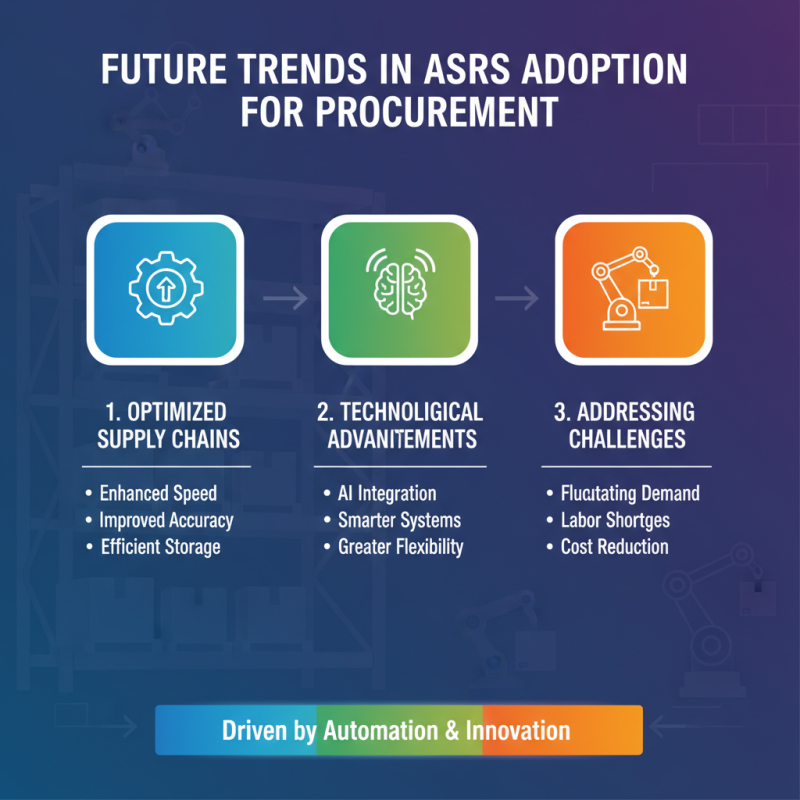
Future Trends in ASRS Adoption for Procurement Solutions
The future of Automated Storage and Retrieval Systems (ASRS) in procurement is both promising and complex. As businesses strive to optimize their supply chains, the demand for efficient storage solutions rises. Companies are increasingly adopting ASRS to enhance speed and accuracy in inventory management. Improved technology and AI integration are driving these changes, making systems smarter and more flexible. This push towards automation addresses the significant challenges of fluctuating demand and labor shortages in warehouses.
However, challenges remain. Organizations encounter hurdles in integrating ASRS with existing systems. Training employees to operate new technologies can be a daunting task. Not every company’s infrastructure fits the latest ASRS designs, which may lead to increased costs. In a landscape of rapid advancements, companies must continuously assess their unique needs and potential pitfalls. Exploring diverse ASRS options is essential, but doing so requires careful planning and consideration.
The evolution of ASRS in procurement is a reflection of broader industry trends. Sustainability practices are becoming integral, pushing companies to seek energy-efficient systems. As sustainability takes center stage, procurement leaders must evaluate how these technologies align with their environmental goals. While ASRS can drive efficiency, it is crucial to reflect on how the adoption fits within a comprehensive strategy. Balancing speed, cost, and sustainability is key in this dynamic landscape.

 +8618862309186
 CONTACT NUMBER
 CONTACT NUMBER
 CONTACT NUMBER