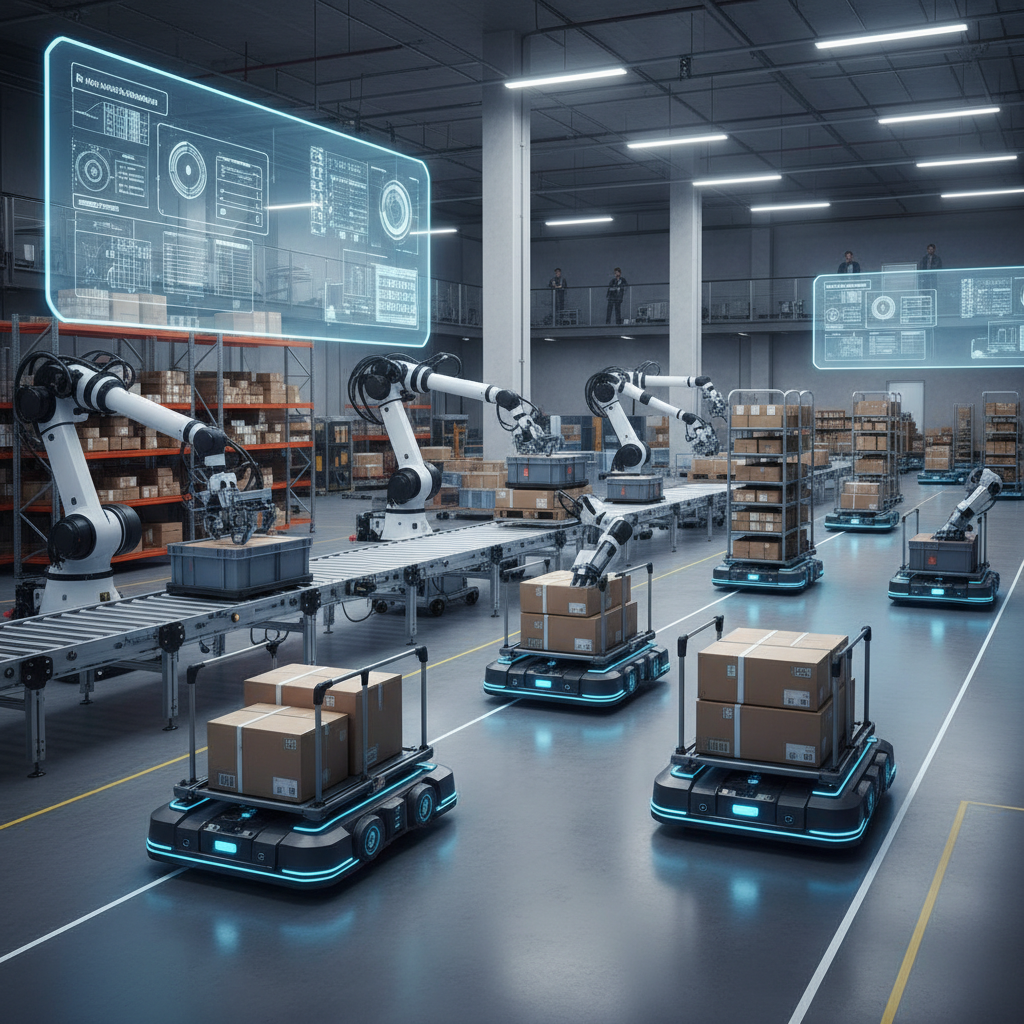
10 Best Warehouse Management Automation Solutions to Maximize Efficiency
In today's fast-paced supply chain landscape, Warehouse Management Automation has emerged as a pivotal strategy for enhancing operational efficiency and accuracy. According to a report by the Warehousing Education and Research Council (WERC), nearly 40% of warehouses are expected to adopt automation technologies by 2025, driven by the need for improved inventory management, faster order fulfillment, and reduced labor costs. This shift not only streamlines processes but also contributes to an overall better customer experience, reflecting an industry trend towards increased reliance on automated solutions.
Furthermore, research from McKinsey reveals that companies that implement warehouse automation can experience a productivity increase of up to 30%, alongside a significant reduction in errors and operational costs. As businesses seek to stay competitive in a rapidly evolving market, the integration of advanced technologies like robotics, AI-driven inventory tracking, and cloud-based management systems is becoming indispensable. This article will explore the ten best Warehouse Management Automation solutions available today, aimed at maximizing efficiency and meeting the dynamic demands of the modern supply chain.

Identifying Key Trends in Warehouse Management Automation for 2025
As we look ahead to 2025, several key trends are emerging in warehouse management automation that will significantly influence efficiency and productivity in the sector. A notable trend is the increased integration of artificial intelligence (AI) and advanced robotics. According to Gartner, AI-driven technologies, alongside automation, are expected to revolutionize supply chains this year, enabling real-time decision-making and streamlined operations. Facilities adopting these technologies will likely see improved accuracy and reduced operational costs.
Another critical trend is the rise of adaptive logistics solutions. With the growing complexity of supply chains, businesses are seeking more flexible systems that can easily adjust to changing demands. The GCC warehouse management system market is projected to expand from USD 150 million in 2024 to USD 493.4 million by 2032, at a compound annual growth rate of 16.2%. This indicates a strong push towards technologies that can enhance responsiveness and agility within warehouse management.
Tip: To maximize your efficiency, consider investing in scalable automation solutions that can grow with your business needs. This will not only future-proof your operations but also position you competitively in a rapidly evolving market.
Tip: Stay updated with the latest trends by participating in industry forums and webinars. Engaging with peers can provide valuable insights into best practices and emerging technologies that can enhance your warehouse management strategy.
Leveraging AI and Machine Learning to Optimize Inventory Control Systems
The integration of AI and machine learning in inventory control systems is becoming essential for corporations aiming to enhance their supply chain efficiency. These technologies enable businesses to analyze vast amounts of data quickly, allowing for more accurate demand forecasting and better inventory management. As a result, organizations can minimize stock-outs and reduce excess inventory, ultimately improving customer satisfaction and profitability.
For instance, businesses can leverage AI tools to optimize warehouse operations by streamlining product placement and refining picking patterns. The implementation of these automated solutions not only speeds up order fulfillment but also significantly reduces operational costs. As companies recognize the potential of AI, investments in supply chain optimization will continue to surge, with predictions indicating that the global AI in supply chain market could surpass USD 192.51 billion by 2034. This reflects a growing trend where automation enhances productivity and transforms inventory control systems into agile, responsive components of the supply chain.
Warehouse Management Automation Solutions Efficiency Comparison
This chart displays the efficiency levels of various warehouse management automation solutions based on key metrics such as inventory turnover rate, order accuracy, and processing speed. The data highlights the potential impact of AI and machine learning in optimizing inventory control systems.
Exploring Robotics and Automated Guided Vehicles in Modern Warehousing
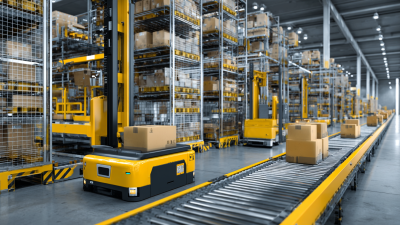
The integration of robotics and Automated Guided Vehicles (AGVs) in modern warehousing has revolutionized the way inventory is managed and processed. Robotics technology enables warehouses to automate tasks such as picking, packing, and sorting, significantly reducing the reliance on human labor for repetitive and physically demanding tasks. This not only boosts efficiency but also minimizes errors, resulting in more accurate order fulfillment. In environments where agility and speed are crucial, robotics systems can operate tirelessly, optimizing workflow and elevating overall productivity.
AGVs play a critical role in enhancing warehouse operations by facilitating the movement of goods within the facility. These driverless vehicles navigate through pre-defined paths, transporting materials from one location to another effortlessly. Their ability to work alongside human workers creates a collaborative environment, where both can focus on higher-level tasks that add value to the operation. As technology evolves, the adaptability and precision of AGVs continue to improve, making them an indispensable part of the logistics ecosystem. With these advancements, warehouses can not only meet growing consumer demands but also streamline their supply chain processes effectively.
Evaluating the Impact of IoT on Supply Chain Visibility and Efficiency
The infusion of the Internet of Things (IoT) into supply chain management is revolutionizing how businesses achieve visibility and efficiency. According to a report by Allied Market Research, the global IoT in the logistics market is projected to reach $34.6 billion by 2026, reflecting the growing recognition of IoT technologies in enhancing operational efficiencies. By integrating IoT devices, companies can gain real-time insights into inventory levels, shipment statuses, and equipment conditions, ultimately leading to more informed decision-making and agility in operations.
In addition, a study by McKinsey & Company highlights that implementing IoT solutions can reduce supply chain operational costs by up to 15%. The connectivity enabled by IoT allows for seamless communication between devices, which helps in anticipating potential disruptions and optimizing resource allocation. As businesses leverage these advanced technologies, they can significantly improve supply chain visibility, ensuring that all stakeholders—from suppliers to customers—have access to timely and accurate information. This transparency not only enhances collaboration but also positions organizations to respond swiftly to market demands, thereby maximizing overall efficiency.
10 Best Warehouse Management Automation Solutions to Maximize Efficiency
| Solution Name |
Key Features |
Integration Capability |
User Rating |
Estimated Cost |
| Automated Inventory Management |
Real-time tracking, stock alerts |
Easy API integration |
4.8/5 |
$150/month |
| Warehouse Robotics |
Picking automation, robots |
Custom ERP integration |
4.7/5 |
$10,000 initial |
| Advanced Shipping Notifications |
Carrier tracking, alerts |
Multi-carrier support |
4.5/5 |
$200/month |
| Barcode Scanning System |
Inventory tracking, error reduction |
Works with most WMS |
4.6/5 |
$500 one-time |
| Cloud-based Warehouse Management |
Real-time updates, scalability |
Easy integration with cloud apps |
4.9/5 |
$120/month |
| Predictive Analytics for Inventory |
Demand forecasting, trends |
ERP and API friendly |
4.8/5 |
$300/month |
| Mobile Warehouse Management App |
Access on-the-go, notifications |
Sync with main WMS |
4.6/5 |
$80/month |
| Return Management Solutions |
Streamlined processes, tracking |
Integrates with shipping |
4.4/5 |
$250/month |
| Inventory Optimization Software |
Stock levels, automated ordering |
Compatible with multiple platforms |
4.7/5 |
$400/month |
Best Practices for Implementing Cloud-Based Warehouse Management Solutions
Implementing cloud-based warehouse management solutions can significantly enhance operational efficiency and streamline processes. To ensure a smooth transition, businesses should first assess their current systems and identify specific inefficiencies. It’s crucial to involve stakeholders from different departments to gather insights about their needs and challenges. This collaborative approach not only fosters buy-in but also helps tailor the new system to optimize workflows effectively.
Another best practice is to focus on data migration and integration. When moving to a cloud-based solution, it’s essential to maintain data integrity and ensure that all critical information is accurately transferred. Companies should conduct thorough testing of the new system before full implementation to uncover any potential issues. Additionally, investing in training programs for staff can facilitate quicker adaptation to the new technology, ensuring employees feel confident in utilizing the sophisticated tools available to them. Ultimately, prioritizing these best practices will lay a solid foundation for maximizing warehouse efficiency through automation.

 +8618862309186
 CONTACT NUMBER
 CONTACT NUMBER
 CONTACT NUMBER