2026 Best WMS Implementation Strategies for Global Buyers?
In the rapidly evolving landscape of global commerce, businesses face mounting pressure to optimize their supply chain operations. The right WMS implementation is crucial for enhancing efficiency and reducing costs. Yet, many companies struggle with this process, leading to challenges in inventory management and order fulfillment.
Choosing a Warehouse Management System (WMS) involves various strategies that can directly impact a business's success. Buyers must consider factors such as integration capabilities, user experience, and scalability. There is no one-size-fits-all approach, and making the wrong choice can delay operations and incur unnecessary expenses.
Successful WMS implementation requires expertise and careful planning. Companies often underestimate the complexity involved, which can lead to missteps. Reflecting on past experiences is vital to avoid repeating mistakes. By sharing insights and strategies, we aim to empower global buyers to navigate their WMS implementation journeys more effectively.

Key Factors in Selecting the Right WMS for Global Operations
Selecting a Warehouse Management System (WMS) for global operations is crucial. Key factors include scalability, flexibility, and integration capabilities. Global buyers need systems that can grow with their business. A WMS should adapt to different markets and changing demands.
Another important aspect is user experience. An intuitive interface can enhance productivity and reduce training time. Employees must easily navigate the system, especially in diverse regions with varying levels of tech proficiency. Also, support and training are vital. Having responsive customer service can make a significant difference in implementation success.
Finally, consider the data management features. A good WMS should offer real-time data visibility. Accurate tracking and reporting capabilities help businesses make informed decisions. However, not all systems excel in this area. Continuous improvement in processes is essential. Regularly assessing system effectiveness will ensure it meets evolving needs.
2026 Best WMS Implementation Strategies for Global Buyers
| Key Factor |
Description |
Importance (1-5) |
Implementation Challenge |
| Integration Capability |
Ability to integrate with existing systems and platforms. |
5 |
Data compatibility issues. |
| Scalability |
Ability to scale operations based on business growth. |
4 |
Establishing flexible infrastructure. |
| User-Friendliness |
Ease of use for warehouse staff and managers. |
4 |
Training requirements. |
| Cost Efficiency |
Overall cost of implementation and ongoing maintenance. |
5 |
Budget constraints. |
| Support and Training |
Quality of provider support and training resources. |
4 |
Access to knowledgeable support staff. |
Understanding Different WMS Deployment Models: Cloud vs. On-Premises
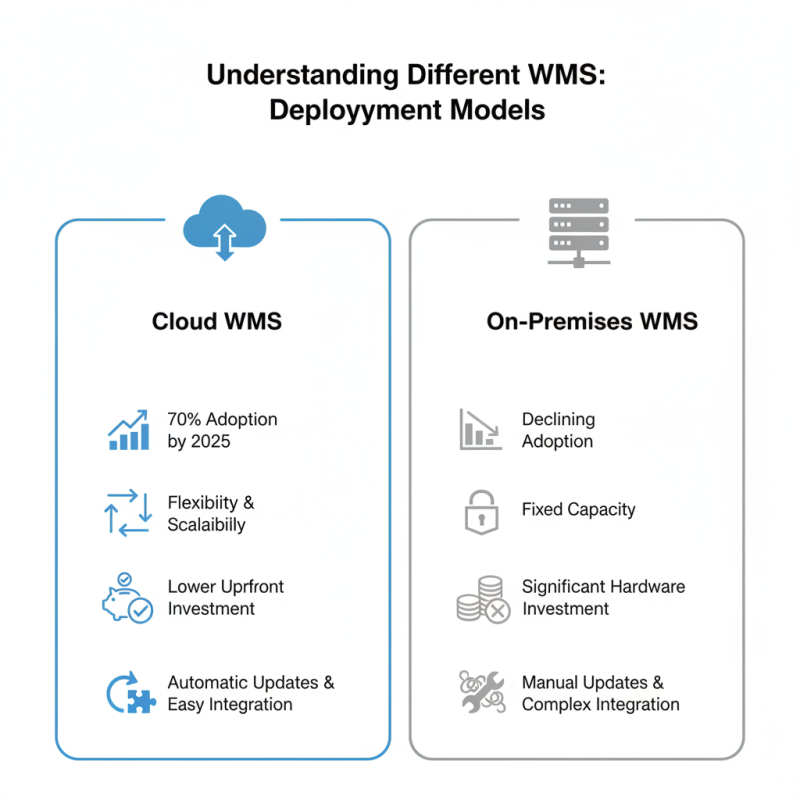
When considering a Warehouse Management System (WMS), the choice between cloud and on-premises deployment is crucial. Research indicates that by 2025, around 70% of businesses will adopt cloud-based solutions for their logistics operations. This shift is driven by flexibility and scalability. Cloud WMS can adapt to business growth without substantial upfront investments in hardware. It offers automatic updates and easier integration with other software solutions.
On the other hand, on-premises WMS systems provide complete control over data and security. They can be customized to meet specific needs, but they demand significant resources for implementation and maintenance. Industry data suggests that companies using on-premises systems face higher total costs of ownership, often exceeding 30% compared to cloud options. This disparity highlights the need for careful evaluation of long-term needs and operational capacity when selecting a deployment model.
Savings with cloud adoption can be significant. A report by a leading supply chain consultancy found firms transitioning to cloud WMS experienced a 40% reduction in inventory costs. However, businesses need to consider their infrastructure readiness and potential data sensitivity issues. The decision is not one-size-fits-all, and companies must weigh these factors carefully to determine the best approach for their operations.
Step-by-Step Guide to WMS Implementation Planning
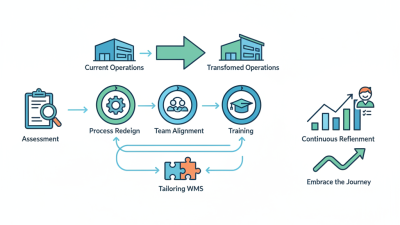
Implementing a Warehouse Management System (WMS) requires careful planning. Effective strategies can streamline operations and enhance efficiency. Start by evaluating current processes. Identify pain points in your supply chain. Engage stakeholders to gather insights. Understand their needs and priorities. This collaboration fosters buy-in from all teams.
Next, create a comprehensive plan. Set clear objectives for the WMS implementation. Outline timelines and necessary resources. Consider potential challenges along the way. For example, integration with existing systems can be complex. Allocate time for testing and adjustments. Don't forget to train your staff thoroughly. Employees must feel confident using the new system.
After implementation, monitor the results closely. Measure performance metrics to ensure the system meets your goals. Keep communication open to address issues quickly. This ongoing evaluation helps refine operations. Sometimes, the initial implementation may not achieve all expected outcomes. Remember, flexibility is key. Adjust your strategies based on feedback and changing needs.
Change Management and User Training for Successful WMS Adoption
Implementing a Warehouse Management System (WMS) successfully hinges on effective change management and user training. According to a report from the Warehousing Education and Research Council, a staggering 70% of WMS implementations fail due to poor user adoption. Training is not just a checkbox; it's critical. Users need to understand how the new system fits into their daily tasks. Customized training sessions can bridge this knowledge gap, leading to smoother transitions.
Additionally, resistance to change is natural. A study from McKinsey shows that companies with a structured change management process are 3.5 times more likely to succeed. Collecting feedback during the rollout helps identify areas needing adjustment. Regular check-ins with users can facilitate an adaptive approach, ensuring they feel involved and heard.
A successful WMS requires continuous learning and adaptation. Data from the Research Institute of Logistics shows that ongoing training can increase efficiency by up to 20%. This emphasizes the need for a long-term commitment to training strategies, not a one-off event. Organizations must be flexible, ready to refine training methods based on user experiences. Training should evolve alongside the WMS for maximum impact.
Measuring Success: KPIs for WMS Performance Evaluation
Evaluating the performance of a Warehouse Management System (WMS) is crucial for global buyers.
Key Performance Indicators (KPIs) help organizations to measure their success effectively.
Common KPIs include order accuracy, inventory turnover, and average order processing time.
Each of these metrics provides insights into the efficiency of a WMS, highlighting areas for improvement.
Tips: Regularly review your KPIs. Setting a schedule can help ensure that you capture trends over time.
Be prepared to adjust your targets if the data shows you're either overreaching or underperforming.
Consider focusing on the accuracy of your inventory levels.
Accurate data reduces costs and improves customer satisfaction.
However, be aware of the challenges that might affect accuracy, such as human error and system integration issues.
Addressing these can lead to better performance metrics.
Tips: Implement routine training sessions for your staff.
An informed team is less likely to make mistakes. Encourage feedback to uncover potential blind spots in your WMS processes.
A culture of continuous improvement can enhance overall performance.

 +8618862309186
 CONTACT NUMBER
 CONTACT NUMBER
 CONTACT NUMBER