How to Choose the Right ASRS Solutions for Your Warehouse Needs?
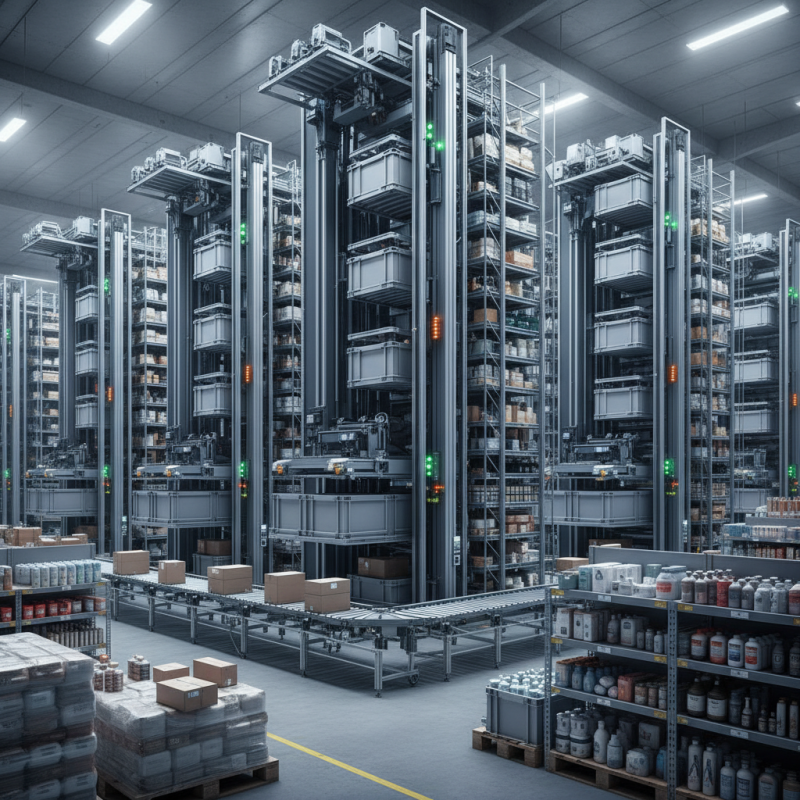
Choosing the right ASRS solutions can significantly impact your warehouse efficiency. Automated Storage and Retrieval Systems are essential for modern warehouses. They streamline operations and maximize space utilization.
When selecting ASRS solutions, consider your specific needs. Do you require high-speed retrieval? Is flexibility essential for your operations? Assessing your inventory type is crucial. Some systems work better for bulk items, while others suit small, varied products.
It's important to reflect on current challenges. Are there bottlenecks in your process? Analyzing these issues can guide your decision. The perfect ASRS solution may not exist. Each option has strengths and weaknesses. Careful evaluation can lead to better choices. Make informed selections for future efficiency.
Understanding ASRS: Definition and Types for Warehouse Efficiency
Automated Storage and Retrieval Systems (ASRS) are essential for modern warehouses. They help improve efficiency. But what exactly are ASRS solutions? They are systems that automatically handle inventory management. This includes storage and retrieval processes. Types of ASRS include
unit-load systems,
mini-load systems, and
shuttle systems. Each type serves different needs.
Unit-load systems handle large loads, perfect for bulk items.
Mini-load systems are designed for smaller products, increasing speed.
Shuttle systems offer flexibility and are suitable for varying loads.
Understanding these types is crucial. Choosing the right ASRS can be challenging. Some warehouses think they need only one solution, but a combination can work better.
Consider your inventory characteristics. Analyze storage efficiency and retrieval speed. Consult with your team about specific needs. Reflect on past inefficiencies too. Sometimes, focusing on one type may overlook unique challenges. A well-rounded approach often yields the best results. It’s important to weigh all options carefully.
Assessing Warehouse Requirements: Key Factors in Choosing ASRS Solutions
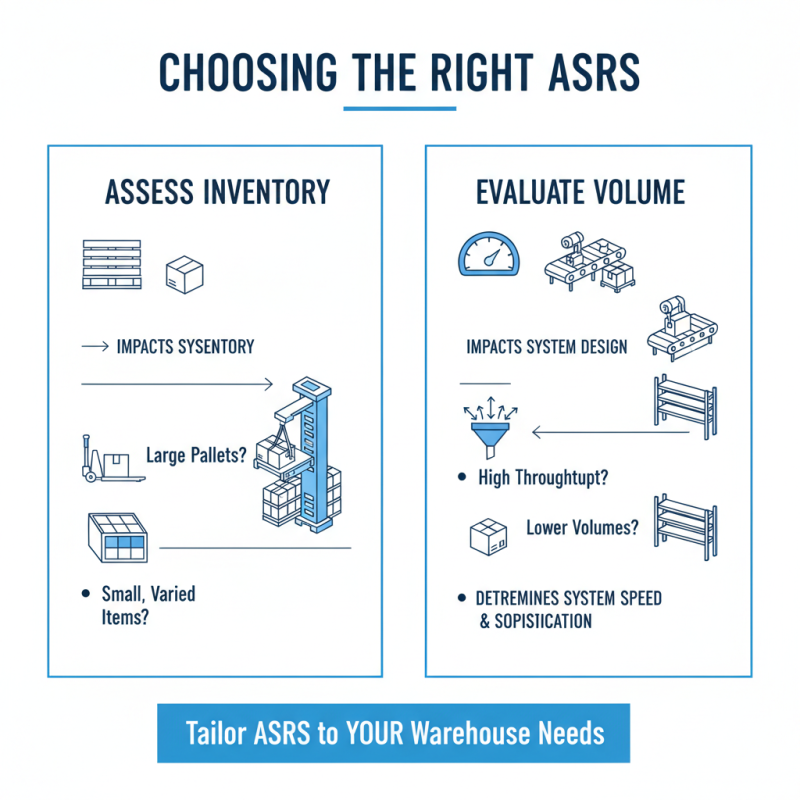
Choosing the right Automated Storage and Retrieval System (ASRS) requires a thorough understanding of your warehouse's specific needs. Start by assessing your inventory types. Are you storing large pallets or small, varied items? This decision impacts the system's design. Next, evaluate the volume of goods you handle. A high throughput demands a faster and more sophisticated system, while lower volumes may allow for simpler solutions.
Consider your layout and available space. An ASRS needs to fit within your existing warehouse environment. If your space is limited, a compact solution might be ideal. However, adding new systems might require rethinking your current setup. What are the potential costs associated with changes? You might overlook expenses in installation or training for your team. Lastly, your future growth matters. Will your needs expand in the next few years? If so, planning for scalability is crucial. Systems that cannot adapt may limit your potential. Reflect on these factors carefully to avoid costly mistakes.
Evaluating ASRS Technologies: Automated vs. Manual Systems Analysis
When evaluating ASRS technologies, you have two main options:
automated systems and
manual systems.
Automated systems can dramatically increase efficiency. They usually require less labor, which can reduce costs in the long run.
However, they often come with high initial setup costs. It's essential to assess your budget carefully.
Think about how much you can invest upfront versus potential savings later.
In contrast, manual systems are often more affordable initially. They offer flexibility, allowing staff to adapt quickly to various tasks.
But, they may lead to inconsistencies in handling. Staff fatigue can increase errors over time.
These are critical aspects to ponder.
Choosing between the two comes down to your warehouse's specific needs. Are you aiming for speed or flexibility?
Consider the trade-offs that each system presents. Balancing cost and efficiency is key to making an informed decision.
Cost-Benefit Analysis: Justifying the Investment in ASRS Solutions
Investing in Automated Storage and Retrieval Systems (ASRS) can bring significant returns for warehouses. A study by Material Handling Industry (MHI) found that implementing ASRS can increase space utilization by up to 85%. This efficiency allows companies to operate within smaller footprints, reducing rent and utility costs. However, the initial investment can be daunting. The average cost of implementing ASRS can range from $300,000 to over $5 million, depending on the complexity and scale.
Cost-benefit analysis is crucial. While the upfront investment is substantial, the long-term savings often justify it. For instance, companies report a reduction in labor costs by up to 30% with ASRS in place. Additionally, ASRS can enhance order accuracy, reducing the costs associated with returns and damages. Yet, many warehouses still hesitate to invest. They may need to assess their workflow and capacity needs first, which may delay decision-making.
Other factors include technology integration and training. A seamless transition requires time and resources. A recent survey indicated that over 40% of warehouse operators feel unprepared for such changes. Investing in employee training is vital to ensure smooth operation. Ultimately, the justification rests on a warehouse's unique operational demands and how ASRS aligns with their future growth.

 +8618862309186
 CONTACT NUMBER
 CONTACT NUMBER
 CONTACT NUMBER