How to Optimize Storage Inventory for 2026 Canton Fair?
As the 2026 Canton Fair approaches, optimizing Storage Inventory becomes vital for businesses. Industry expert Mark Johnson states, "Effective storage inventory management can lead to better sales and customer satisfaction." This sentiment rings especially true as suppliers prepare for the huge event in April and May.
With three phases focusing on diverse sectors, from advanced manufacturing to textiles, the fair will host an immense volume of products. Properly managing storage inventory can enhance efficiency, allowing sellers to quickly respond to buyer needs. The integration of AI search functionalities will further streamline inventory processes, yet it raises questions about how businesses will adapt.
Too often, companies underestimate their storage capacity until it’s too late. Lack of proactive inventory management can lead to missed opportunities at the fair. The challenge lies in balancing inventory levels while ensuring a smooth flow of goods. As the fair's popularity grows, the focus on Storage Inventory optimization should become a priority to stay competitive.

Evaluate Historical Data for Inventory Trends Before the Fair
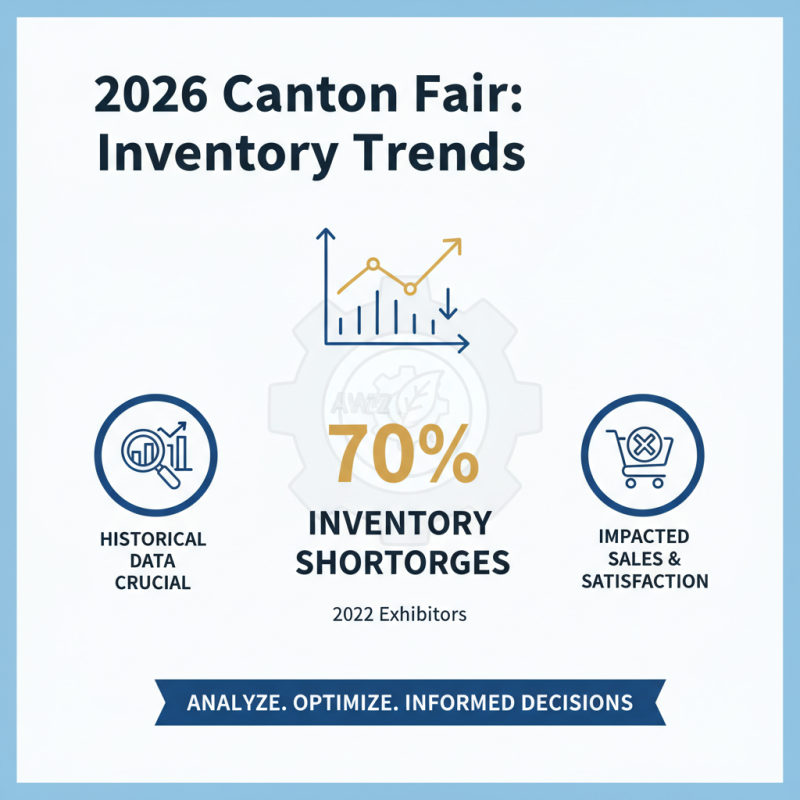
Evaluating historical data is crucial for optimizing storage inventory before the 2026 Canton Fair. Past trends reveal significant insights. Data shows that in 2022, nearly 70% of exhibitors faced inventory shortages. This impacted sales and customer satisfaction. Analyzing these trends allows businesses to make informed decisions.
One key observation is seasonal demand spikes. Sales often surged in Q2 leading up to the Fair. In 2023, a report indicated that inventory turnover rates increased by 35% during this period. Companies that adapted their stock levels saw a 25% boost in profit margins compared to those that didn’t. However, not all firms responded effectively. Some overstocked, leading to increased holding costs.
Inventory analysis isn’t just about numbers. It’s about understanding market shifts. Failing to adjust inventory based on historical data can result in missed opportunities. Adapting to these trends requires a nuanced approach. Businesses need to balance inventory levels with expected demand while remaining agile. This strategy will help avoid past mistakes and maximize performance at the upcoming Fair.
Assess Product Demand and Market Trends for 2026
Assessing product demand and market trends is crucial for optimizing storage inventory for the 2026 Canton Fair. According to recent industry reports, online retail sales are expected to grow by 16% annually over the next few years. This encourages businesses to stock innovative products that align with consumer preferences. Research highlights that eco-friendly items are increasingly popular, with a 20% surge in demand noted in recent surveys.
However, challenges remain. Many businesses misjudge the demand for specific categories. For instance, while tech gadgets are trending, excess stock can lead to financial strain. The market fluctuates rapidly, and not all trends are sustainable. Sellers must be wary of over-investing in short-lived fashions. Data suggests that around 30% of inventory becomes obsolete within a year.
Monitoring social media and consumer feedback can refine inventory strategies. Engaging with potential buyers through crowdfunding platforms offers real-time insights into product viability. This approach may help avoid costly stock mistakes. Balancing trends with practical inventory management is essential for a successful Canton Fair showing.
Product Demand and Market Trends for 2026 Canton Fair
Develop a Strategic Storage Plan for Varied Product Categories
To effectively prepare for the 2026 Canton Fair, developing a strategic storage plan is essential. Companies must consider the diverse product categories they will showcase. According to a recent industry report, over 40% of exhibitors struggle with inventory management, leading to unnecessary costs and storage issues. A strategic plan can mitigate these problems.
Designing a tailored storage plan involves categorizing products based on size and demand. Larger items may require significant space, while smaller products can be stacked efficiently. For instance, electronics often need climate-controlled environments, whereas textiles are less sensitive. Employing software tools for real-time inventory tracking can enhance efficiency. Breaking down categories helps avoid overwhelming storage spaces.
Moreover, reflections on past fairs indicate that misjudgments in inventory can result in wasted resources. For example, one study highlighted that retailers who overestimated demand faced a 15% increase in storage costs. Regular assessments and flexible strategies are vital. Adjusting inventory based on historical sales data can lead to improved decision-making, ensuring readiness for unexpected changes.
Implement Inventory Management Technology for Efficiency
Implementing effective inventory management technology is crucial for optimizing storage inventory at events like the Canton Fair in 2026. According to a report by the Inventory Management Association, businesses that utilize advanced inventory systems can reduce excess stock by up to 30%. This not only lowers storage costs but also streamlines operations. Employing technology like RFID tracking or cloud-based systems allows for real-time insights into stock levels, enhancing decision-making.
However, the transition to these technologies can be challenging. Many companies face difficulties with integration, leading to underutilization. A study from the Logistics Management Journal indicated that 40% of firms reported feeling overwhelmed during the implementation process. It's important to invest in training and support to ensure staff can effectively use new tools. Furthermore, accuracy is essential; data input errors can create significant discrepancies in inventory levels.
Continuous assessment of inventory practices is necessary. The supply chain landscape is always evolving, and what works today may not be effective tomorrow. According to a recent survey by the Supply Chain Institute, 65% of businesses agree that adapting their inventory strategies is key to remaining competitive. Leveraging technology must be viewed as an ongoing process, not a one-time fix. Being aware of these challenges can lead to more informed, adaptive strategies.
How to Optimize Storage Inventory for 2026 Canton Fair? - Implement Inventory Management Technology for Efficiency
| Product Category |
Current Inventory Level |
Reorder Level |
Lead Time (Days) |
Recommended Order Quantity |
| Electronics |
150 |
100 |
15 |
200 |
| Home Appliances |
80 |
50 |
10 |
100 |
| Fashion Accessories |
200 |
150 |
7 |
300 |
| Toys |
120 |
80 |
14 |
150 |
| Sports Equipment |
90 |
70 |
12 |
120 |
Establish a Contingency Plan for Inventory Shortfalls During the Fair
Establishing a contingency plan is vital for managing inventory shortfalls at the 2026 Canton Fair. Events like this attract thousands of exhibitors and buyers, creating a significant demand for various products. According to industry reports, as much as 30% of exhibitors run out of stock during large trade fairs. This shortfall can lead to lost sales and damaged relationships.
To combat this, businesses should analyze past sales data from similar events. This helps to forecast potential inventory needs accurately. Keeping a minimum of 20% extra stock for fast-moving items can alleviate shortages. For less popular items, 10% additional stock may suffice. Yet, overestimating can lead to excess inventory, which ties up capital and increases holding costs.
Setting up a real-time monitoring system for inventory levels is another key strategy. This system ensures timely alerts when stock hits predefined thresholds. An agile response can make a difference. However, reliance on technology doesn’t come without risks. Technical failures could lead to unexpected stockouts or surplus. It’s essential to reflect on past experiences and adjust accordingly.

 +8618862309186
 CONTACT NUMBER
 CONTACT NUMBER
 CONTACT NUMBER