Leave Your Message

2026 Best Vertical Lift Carousel for Warehouse Storage

Warehouse space is expensive, and every extra step between a picker and a product can slow an order. A Vertical Lift Carousel can bring stored items to an accessible opening, helping teams use vertical space and reduce unnecessary walking. That sounds simple. In practice, the best fit depends on the building, inventory, and daily picking patterns.

Terminology can be confusing. Some suppliers use “Vertical Lift Carousel” broadly, while others distinguish lift modules from carousel systems. Buyers should confirm how trays move, how goods are presented, and what the quoted equipment actually includes. This guide focuses on practical selection for warehouse storage in 2026, not on product labels alone.

Compare usable storage capacity, item dimensions, tray load limits, retrieval speed, and operator access. Check ceiling height, floor loading, fire protection requirements, and how the system connects with warehouse software. A fast machine may still create a bottleneck if replenishment is awkward or orders arrive in uneven waves. Small details matter. A tote that fits on paper might be difficult to handle when packed or irregularly shaped.

The best system is not automatically the largest or most automated. Assess expected order volume, peak demand, service support, installation needs, and long-term operating costs. Ask vendors to explain their assumptions and demonstrate workflows using representative items. Even a careful comparison has limits: forecasts change, and published performance figures may not reflect your site. A grounded shortlist leaves room to question the numbers before committing.
2026 Best Vertical Lift Carousel for Warehouse Storage

Vertical Lift Carousel Systems: Definition and Core Components

A vertical lift carousel is an automated storage system that brings stored goods to an operator at an access opening. The term is sometimes used loosely; many systems described this way are vertical lift modules, which use an extractor to retrieve trays from tall storage columns. Unlike a rotating carousel, the trays do not travel around a continuous loop. That distinction matters when comparing equipment.

The main components are the storage frame, inventory trays, vertical extractor, access window, and control system. The frame supports trays on both sides of a central lift shaft. The extractor moves vertically, selects a tray, and presents it at a comfortable working height. Sensors and software help track tray locations and manage retrieval requests. Keep it practical. Tray dimensions and load limits should match the actual inventory, not just a sample list.

In a warehouse, an operator might request a small carton of fasteners, then receive its tray at the opening within moments. The enclosure can reduce exposed storage and make use of overhead space, but it also requires clear service access and suitable floor capacity. Noise, retrieval speed, and tray spacing vary by design. These details are easy to overlook. A system can look efficient on paper and still frustrate staff if frequently picked items sit far apart or awkwardly arranged.
2026 Best Vertical Lift Carousel for Warehouse Storage

Vertical Lift Carousel Systems: Definition and Core Components

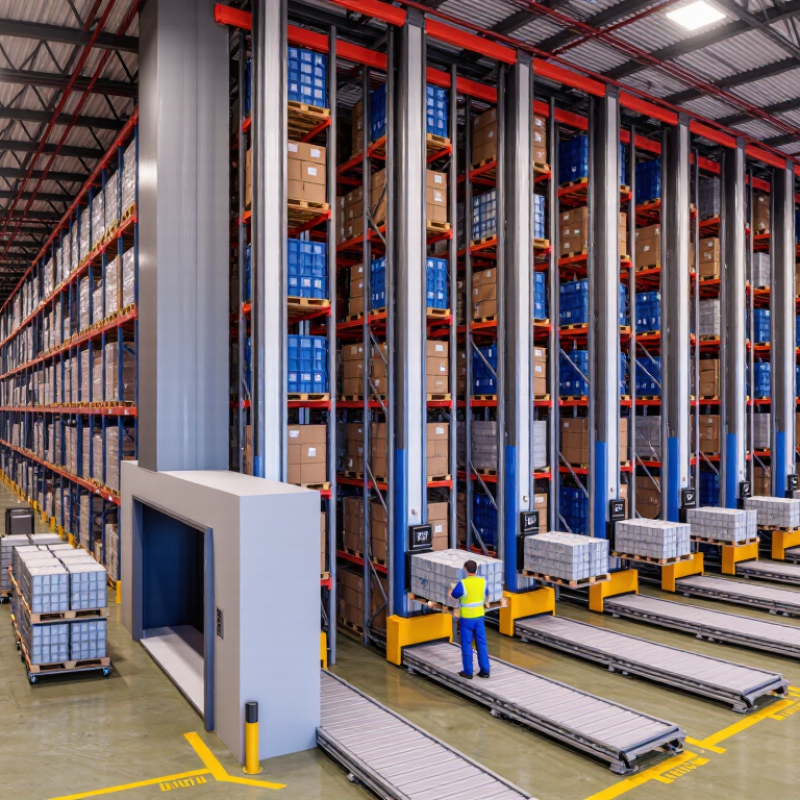
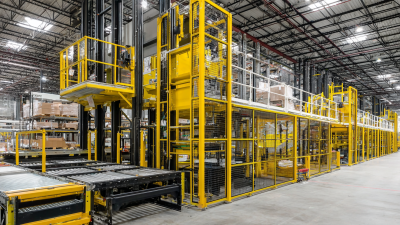
A vertical lift module (VLM) stores trays in two vertical columns and uses a central extractor to retrieve and deliver a selected tray to an access opening. This representative layout shows the basic component counts; actual designs and optional features vary.

How a Vertical Lift Carousel Stores and Retrieves Inventory

A vertical lift carousel stores trays in two vertical columns, with an extractor moving between them. When an operator requests a SKU, the control system identifies its tray and brings it to an access opening. No aisle walking is needed for that pick. The operator scans the item, removes the required quantity, and confirms the transaction. Then the tray returns to its assigned position. Think of a tote arriving at waist height, not a worker climbing a ladder.

Good results depend on accurate item dimensions, weight records, and slotting rules. MHI’s 2024 Annual Industry Report found that 55% of surveyed supply chain leaders planned to increase technology investment. That figure signals interest, not proof that every site will benefit. Before installation, teams should check order patterns, peak demand, ceiling clearance, and how replenishment will work. A poorly sized tray or outdated inventory record can slow retrieval rather than improve it.

Tips: Test a representative mix of fast- and slow-moving items. Keep barcode scans at both put-away and picking. Review exception picks each week; they often reveal imperfect slotting rules.

2026 Best Vertical Lift Carousel for Warehouse Storage - How a Vertical Lift Carousel Stores and Retrieves Inventory

Dimension How It Works Warehouse Considerations
Storage principle A vertical lift module (VLM) stores trays in a tall enclosure, typically in columns on both sides of a central extractor. A vertical carousel instead moves shelves around a continuous vertical loop. The terms are sometimes used loosely. Confirm whether a proposed system uses an extractor and trays or a rotating shelf loop before comparing equipment.
Put-away An operator identifies an item and places it in an assigned tray or location. Depending on the system, software can record the item, quantity, and storage position. Use clear item identification and location rules. Barcode scanning or other data-entry methods can help maintain inventory records.
Retrieval cycle A pick request identifies the required item or tray. In a VLM, the extractor moves to the relevant storage position and presents the tray at an access opening. In a vertical carousel, the shelf loop rotates to bring the requested shelf to the opening. The operator retrieves the requested quantity and confirms the transaction according to the site’s process and system setup.
Goods-to-person picking The storage equipment brings a tray or shelf to a fixed operator access point, reducing the need to walk to each storage location. Actual labor and throughput outcomes depend on order profile, system configuration, operator workflow, and integration with other warehouse processes.
Inventory control A warehouse control system or warehouse management system may direct storage and retrieval tasks and maintain location and quantity records. Confirm required interfaces, transaction steps, and procedures for cycle counting, replenishment, and handling inventory discrepancies.
Item and tray suitability Items are stored on trays or shelves within the equipment’s specified load and dimensional limits. Dividers and containers can help organize smaller items. Check the equipment’s rated load, tray dimensions, item size, weight distribution, and handling requirements. Do not assume all items fit every configuration.
Space and installation Vertical storage uses building height and concentrates access at one or more openings. Equipment height, footprint, and opening arrangement vary by design. Assess ceiling clearance, floor loading, aisle access, power, fire protection, and space for installation and maintenance before selection.
Safety and access Enclosures and access controls are intended to limit access to moving storage components. Specific guarding and safety features depend on the equipment and installation. Review applicable workplace safety requirements, operator training, maintenance procedures, and the manufacturer’s operating instructions.
Best-fit applications These systems can suit small-parts storage, order picking, component storage, and other applications where items can be organized on trays or shelves. Evaluate item dimensions, demand patterns, order mix, replenishment needs, storage density, and integration requirements against the specific system design.

Warehouse Applications and Benefits of Vertical Lift Carousels

Vertical lift carousels suit warehouses that need dense storage near the picking point. A tray travels vertically inside an enclosed tower, presenting the requested goods at an ergonomic access opening. This can reduce floor space devoted to static shelving and limit long walks between pick locations. It is especially useful for small parts, maintenance supplies, and fast-moving items. Keep frequently picked stock near the opening; poor slotting can erase some of the time savings.

The fit depends on ceiling height, tray loads, item dimensions, and order patterns. A site assessment should measure these before specifying the equipment. MHI’s 2024 Annual Industry Report gathered responses from more than 2,000 supply-chain professionals and examined technology adoption across the sector. That scale signals sustained industry attention to automation, but it does not prove every warehouse will gain the same return. Run a pilot and compare pick time, travel distance, and error rates against current methods. Real results vary.

Tips: Keep labels visible and group items by picking frequency. Check tray loads and clearances during routine inspections. Include operators in the layout review; they often spot awkward reaches that a drawing misses. Vertical storage helps, but it is not a substitute for thoughtful inventory control.

How to Choose the Best Vertical Lift Carousel in 2026

Choosing the best vertical lift carousel in 2026 starts with the work, not the machine. List the items stored, their dimensions, weights, and daily picks. Measure ceiling height, usable floor area, and access routes for installation. Measure twice. A compact footprint matters, but trays must fit real products without awkward stacking. Ask suppliers to model peak demand using your order history, then verify the assumed picks per hour with a live demonstration.

MHI’s 2024 Annual Industry Report found that 55% of respondents planned to increase investment in supply-chain technology. That signals growing interest, not guaranteed savings. Compare quoted throughput with your own shift patterns, staffing, and replenishment needs.

The Bureau of Labor Statistics reported a 2023 injury rate of 4.0 cases per 100 full-time workers in warehousing and storage; this is an industry-wide figure, not proof that a lift system will reduce injuries. Check reach heights, access controls, emergency procedures, and operator training with your safety team.

Still, a polished demo can mislead. Request a trial with representative items, and review service response times, spare-part availability, and maintenance access before choosing.

Installation, Safety, and Maintenance Considerations

A vertical lift carousel can save floor space, but installation quality determines how safely it works. Measure ceiling clearance, floor capacity, aisle width, and access routes before delivery. The supporting slab must meet the equipment specifications; visual inspection alone is not enough. Have qualified technicians level and anchor the unit, then test travel limits, doors, sensors, and emergency stops before operators use it. Small errors matter.

Tips: Keep the loading opening clear. Label shelf locations, post rated load limits, and train operators to report unusual vibration or uneven movement. Never bypass an interlock to speed up picking.

Maintenance should follow the equipment manual and site risk procedures. Inspect belts or chains, guides, fasteners, wiring, and safety devices at scheduled intervals. Record findings, repairs, and recurring faults; a simple log can reveal wear before it causes a stoppage. Isolate power and secure moving parts before service, and assign work to trained personnel. Dust near sensors can cause unreliable readings, while overloaded trays may strain drive components. It is easy to overlook minor noise during a busy shift. Don’t. Recheck the unit after repairs, and revise inspection frequency when usage or storage loads change.