How to Follow Warehouse Guidelines for Efficient Supply Chain?
In today's rapidly evolving supply chain landscape, adhering to Warehouse Guidelines is crucial for operational success. According to a report by the Warehousing Education and Research Council, companies that implement effective warehouse management strategies can reduce operational costs by up to 20%. Such efficiency not only boosts profitability but also enhances customer satisfaction.
Over 70% of supply chain leaders believe that optimizing warehouse operations directly influences overall supply chain performance. These guidelines include inventory management, layout planning, and technology integration. Each aspect requires careful consideration. Companies may struggle with implementation, often due to outdated practices or insufficient training.
Continuous improvement is essential. The fluctuating nature of demand necessitates a flexible approach to warehouse operations. Data from the Logistics Management Magazine highlights that almost 60% of companies do not consistently review their warehouse guidelines. Regular evaluations can reveal inefficiencies and lead to significant gains. Ultimately, efficient adherence to these guidelines will foster a more resilient and responsive supply chain.

Understanding Warehouse Guidelines and Their Importance
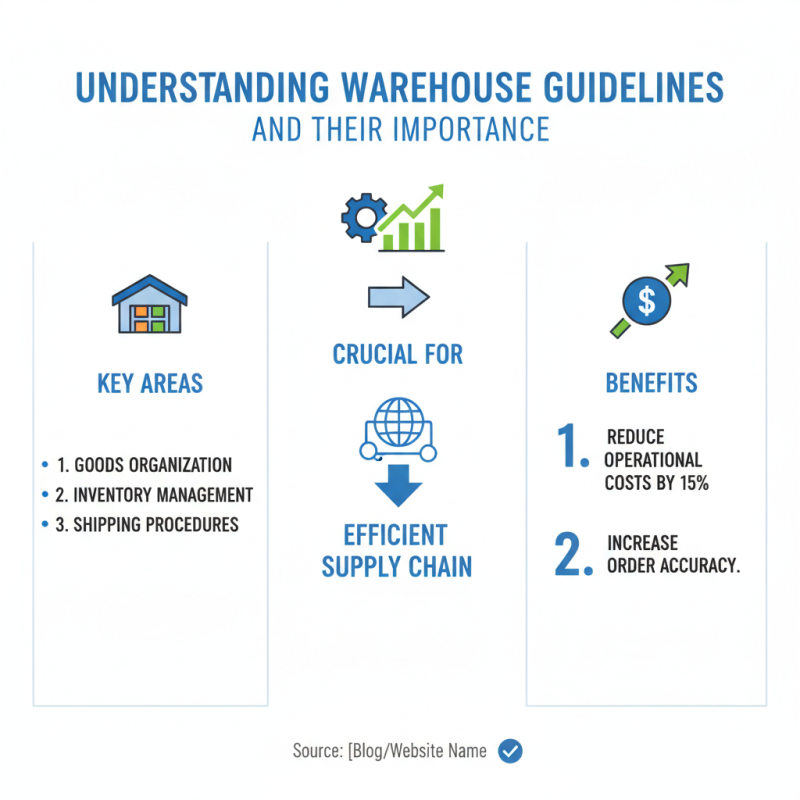
Understanding warehouse guidelines is crucial for an efficient supply chain. These guidelines dictate the organization of goods, inventory management, and shipping procedures. When followed properly, they can reduce operational costs by 15% and increase order accuracy.
Effective warehouse management requires attention to detail. For instance, optimizing storage space can enhance productivity by nearly 30%. However, many warehouses still struggle with poor layout design. This can lead to higher picking and packing times, which accumulate unnecessary costs. It is vital to regularly assess warehouse layouts and workflows.
Moreover, training staff on warehouse guidelines improves compliance and safety. Reports indicate that well-trained employees contribute to a 25% decrease in workplace accidents. Yet, many organizations overlook ongoing training. Neglecting this aspect may lead to inefficiency and higher turnover rates. Emphasizing the importance of continuous improvement is essential for long-term success in warehousing and supply chain management.
Key Principles of Efficient Warehouse Management
Efficient warehouse management is crucial for a responsive supply chain. According to the Logistics Management Report, 57% of organizations face challenges in meeting customer demand due to warehouse inefficiencies. Implementing key principles can enhance operations significantly.
Focus on layout optimization. A well-designed warehouse layout improves picking speed. Studies show that optimizing layout can reduce travel time by 20-30%. Consider using vertical space effectively. This can increase storage without expanding the footprint. Examine storage systems regularly. Identify underutilized areas and adjust accordingly.
Invest in technology like barcode or RFID systems for better tracking. Automated inventory management reduces errors and boosts efficiency. It’s crucial to train staff on these tools. A skilled workforce can adapt quickly to changing processes. Many companies report a 10-15% increase in productivity after staff training.
Regular audits are necessary. These ensure compliance with warehouse guidelines. Identify issues proactively to minimize disruptions. Reflect on past mistakes to avoid repeating them. Use data analytics to measure performance and identify areas for improvement.
Implementing Standard Operating Procedures (SOPs)
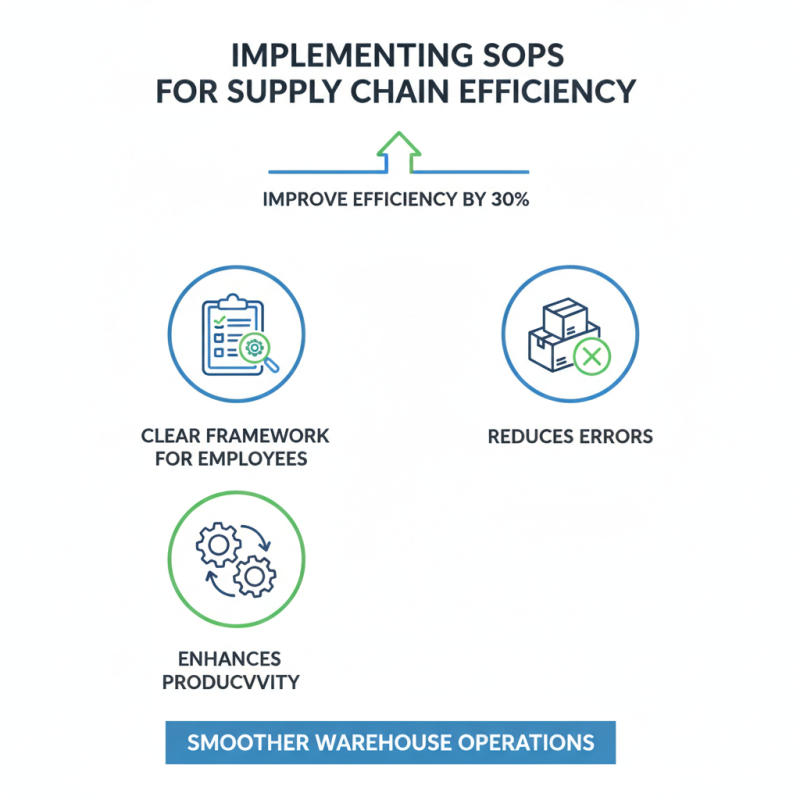
Implementing Standard Operating Procedures (SOPs) is crucial for an efficient supply chain in a warehouse setting. Research shows that organizations with well-defined SOPs can improve efficiency by up to 30%. Standard Operating Procedures establish a clear framework for employees. This reduces errors and enhances productivity.
For instance, SOPs should cover receiving, storage, and shipping processes. Employees can follow consistent guidelines when handling goods, which minimizes the risk of mistakes. Moreover, reviews of these procedures should occur regularly. Maintaining relevance is essential as market conditions and operational needs evolve.
**Tip:** Regularly train your team on SOPs to ensure everyone is onboard. This reduces confusion and creates accountability.
Additionally, it’s important that SOPs are accessible. A centralized digital repository can help. Often, employees struggle to find relevant documents, leading to deviations from standard procedures. An intuitive system is essential for compliance and efficiency.
**Tip:** Encourage feedback on SOP effectiveness. Employees on the ground can provide valuable insights. This can help refine processes and increase overall productivity.
Reviewing and updating SOPs is necessary for continuous improvement. Regular assessments can highlight areas needing adjustment. Not every procedure will work perfectly the first time; learning from challenges leads to stronger operations.
Training Staff to Adhere to Warehouse Guidelines
Training staff to adhere to warehouse guidelines is crucial for creating an efficient supply chain. Employees must understand the importance of these guidelines. Clear communication of expectations goes a long way. Regular training sessions can boost compliance and efficiency. Visual aids like posters can emphasize key protocols.
Moreover, hands-on training fosters familiarity with equipment and procedures. Employees should participate in simulations to practice under pressure. It’s important to gather feedback during these sessions. This helps identify areas for improvement. Sometimes, the staff may feel overwhelmed by the guidelines. Continuous support and open discussions can alleviate this stress.
Moreover, recognition of adherence to guidelines can motivate staff. Simple rewards or acknowledgment can reinforce positive behavior. However, gaps may still persist in understanding. It’s vital to regularly revise and adapt training materials. Keeping content current ensures relevance and effectiveness. This approach fosters a culture of continuous improvement, which is essential for operational success.
Monitoring and Evaluating Supply Chain Performance
Monitoring and evaluating supply chain performance is crucial in any warehouse management system. Regularly tracking key performance indicators (KPIs) provides valuable insights into operational efficiency. For instance, measuring order fulfillment rates can highlight bottlenecks that need addressing. Analyzing inventory turnover rates can show how well products move in and out of the warehouse.
Effective evaluation requires more than just numbers. Engaging with warehouse staff can reveal underlying issues that data alone cannot. Sometimes, inefficiencies arise from outdated processes or inadequate training. It’s essential to foster a culture of continuous improvement. Employees should feel empowered to provide feedback on workflows. Regular meetings can create an open dialogue to discuss performance metrics and brainstorming solutions.
However, reliance solely on quantitative data has its pitfalls. Data can paint a misleading picture if not interpreted correctly. For example, a decline in performance might stem from seasonal demand fluctuations rather than poor management. Therefore, integrating qualitative assessments is equally important. Customer feedback and employee insights can help paint a fuller picture. Striking a balance between data and human insight can lead to more informed decisions.
Warehouse Guidelines Performance Monitoring
This chart displays the performance metrics of supply chain efficiency based on various parameters. The data represents the average monthly performance across different key performance indicators (KPIs) relevant to warehouse operations.

 +8618862309186
 CONTACT NUMBER
 CONTACT NUMBER
 CONTACT NUMBER