What is Rack Automation and How Can It Benefit Your Business?
Rack Automation is revolutionizing how businesses manage their data centers. According to a recent report by MarketsandMarkets, the global market for data center automation is projected to reach $19.6 billion by 2026. This growth reflects the increasing demand for efficient and streamlined operations.
Implementing Rack Automation can enhance operational efficiency by reducing manual tasks. Companies can achieve faster processing times and minimize human error. A survey by Gartner highlighted that organizations utilizing automation reported a 30% increase in productivity. These improvements can lead to significant cost savings and better resource allocation.
Despite these advantages, adopting Rack Automation is not without challenges. Organizations must ensure their staff are trained and well-versed in new technologies. Without proper support, these tools may not reach their full potential. Therefore, reflecting on the proper integration and ongoing training is crucial for maximizing the benefits of Rack Automation.

What is Rack Automation?
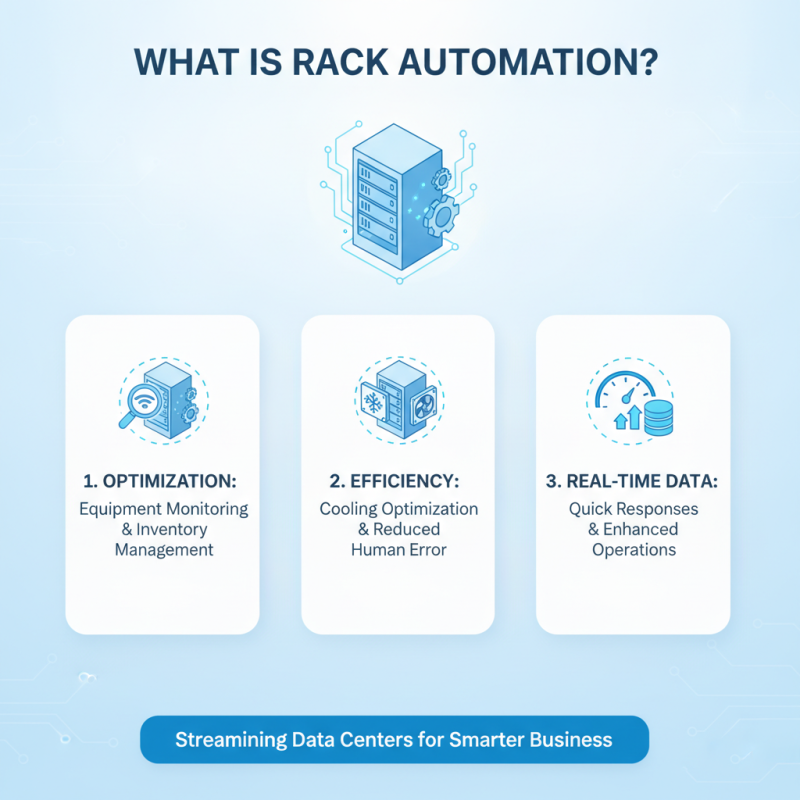
Rack automation refers to the use of technology to optimize the organization and management of server racks in data centers. This process incorporates automated systems that streamline tasks like equipment monitoring, inventory management, and cooling optimization. By doing so, businesses can enhance operational efficiency and reduce human error. An automated rack system can provide real-time data, allowing for quick responses to potential issues.
Implementing rack automation can transform the data center experience. It reduces the time spent on manual tasks, allowing staff to focus on more strategic activities. However, challenges may arise when integrating such systems with existing infrastructure. Proper planning and expertise are required to ensure a seamless transition. Businesses must continually assess their automation strategies to address any shortcomings.
Automating rack management provides insights into power consumption and temperature levels. This data is crucial for maintaining optimal performance. Yet, over-reliance on automation can pose risks. Human oversight remains essential to avoid potential failures. It's important for organizations to strike a balance between relying on automated solutions and keeping manual processes in place for critical operations.
Key Components of Rack Automation Systems
Rack automation systems are becoming crucial in modern warehouses and data centers. They improve efficiency by automating essential processes. According to a report by the International Data Corporation (IDC), businesses can boost their operational efficiency by up to 30% by implementing such systems. This efficiency stems from various key components integrated into rack automation.
One vital component is automated storage and retrieval systems (AS/RS). They operate using robotic systems that organize and retrieve items quickly. Such technology reduces manual labor and the time taken to locate goods. Another key aspect is advanced inventory management software. This software provides real-time tracking of inventory levels and movement, improving accuracy. According to McKinsey, companies utilizing AI-driven inventory management report a 20% reduction in excess stock.
Furthermore, automated control systems enhance monitoring capabilities. They track environmental conditions and system performance. Integrated sensors and data analytics provide valuable insights into system operations. However, implementing these systems can be complex. Businesses may face challenges during transition phases and require thorough planning. Despite these hurdles, the long-term benefits of rack automation are significant, often justifying the initial investment.
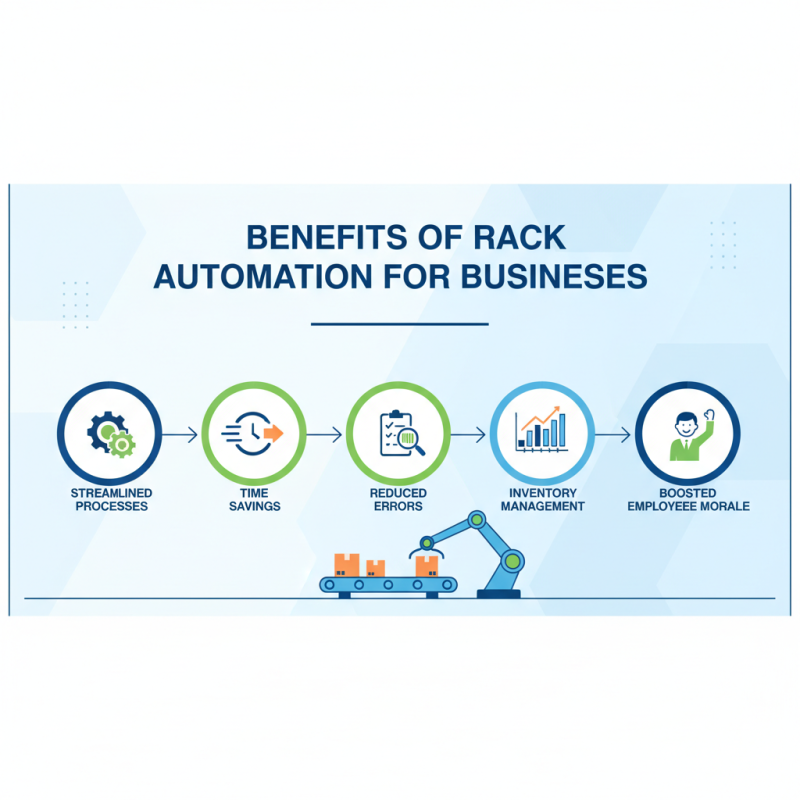
Benefits of Rack Automation in Business
Implementation Strategies for Rack Automation
Rack automation has emerged as a transformative approach in various industries. Implementing effective strategies can lead to significant efficiency gains. According to a recent report by the International Data Corporation, businesses that adopt automation tools experience a 15% increase in operational efficiency within the first year. This statistic underscores the potential impact of rack automation on overall productivity.
To implement rack automation, companies should assess their current systems and processes. Identify areas where automation can bridge gaps. This requires a thorough understanding of both technological capabilities and organizational needs. Studies indicate that 70% of companies that customize their automation strategies see improved output. However, challenges persist. Some organizations struggle with employee resistance to change or lack of technical knowledge. Addressing these issues is crucial for successful implementation.
Training and support should accompany any new system. By providing clear guidelines and resources, organizations can foster a smoother transition. The establishment of a feedback loop can also enhance the process. Gathering employee insights promotes continuous improvement and ensures that systems evolve alongside operational demands. Such reflection is vital in optimizing rack automation initiatives and achieving lasting benefits.
What is Rack Automation and How Can It Benefit Your Business?
| Dimension |
Details |
| Automation Type |
Dynamic Rack Systems |
| Key Benefits |
Increased Efficiency, Reduced Labor Costs |
| Implementation Cost |
$50,000 - $200,000 |
| ROI Timeline |
6 to 18 months |
| Integration With |
Inventory Management Systems, ERP Software |
| Scalability |
High, supports growth and expansions |
| User Training |
Required, typically 2-4 days |
| Maintenance |
Regular upkeep to ensure optimal performance |
Future Trends in Rack Automation Technology
The landscape of rack automation is evolving rapidly. Companies are increasingly turning to advanced robotics and AI to optimize their storage solutions. This shift is not just about efficiency; it is also about accuracy. Automated systems can drastically reduce human error, ensuring more reliable inventory management. As the technology matures, we can expect more intuitive interfaces that require minimal training.
In the upcoming years, the focus will likely be on integrating IoT with rack automation. Smart sensors could provide real-time data, allowing for predictive maintenance and inventory forecasting. However, challenges remain. Companies might struggle with the initial investment and integration into existing systems. Balancing new technology with traditional methods may pose resistance from staff.
The future also hints at enhanced flexibility in rack systems. Modular designs will allow businesses to reconfigure storage as needs change. Yet, this adaptation may not be seamless. Organizations will need to rethink workflows and employee roles in the process. Embracing these trends will require careful consideration and ongoing assessment.

 +8618862309186
 CONTACT NUMBER
 CONTACT NUMBER
 CONTACT NUMBER