+8618862309186


In today’s fast-paced logistics landscape, a robust Warehouse Management Tool is essential for efficiency. As supply chain expert Dr. Emily Chen states, "The right tools can make or break warehouse operations." This highlights the critical role these tools play in optimizing workflow.
Warehouse Management Tools help to streamline processes, reduce errors, and enhance inventory visibility. However, not every tool fits every warehouse. Many businesses struggle with selecting the right solution. This often leads to underutilization or, worse, inefficiencies.
Navigating the wide array of options can be overwhelming. The effectiveness of a Warehouse Management Tool lies in how well it aligns with specific operational needs. Making an informed choice requires reflection on past experiences and a keen understanding of future requirements. A well-chosen tool can transform a chaotic warehouse into a model of efficiency, but the journey requires careful thought.

In today's fast-paced logistics environment, warehouse management tools are essential for maintaining efficiency. These tools help streamline operations, track inventory, and enhance order fulfillment. Many facilities still rely on outdated systems or manual methods. This can lead to errors and delays, hurting productivity and customer satisfaction.
Modern warehouse management tools utilize advanced technology. Features like real-time inventory tracking and automated reporting can significantly reduce manual labor. User-friendly interfaces are available, making them accessible even for non-technical staff. However, some users often feel overwhelmed by the extensive features. They might overlook functions that could simplify their operations, causing missed opportunities for efficiency gains.
Integration is another critical aspect to consider. Not all tools work seamlessly with existing systems. This can create data silos, leading to more confusion. Training staff to use these tools effectively is also challenging but necessary for success. Without proper training, the advantages of these tools may not be fully realized. Ultimately, finding the right balance of functionality and usability is crucial.

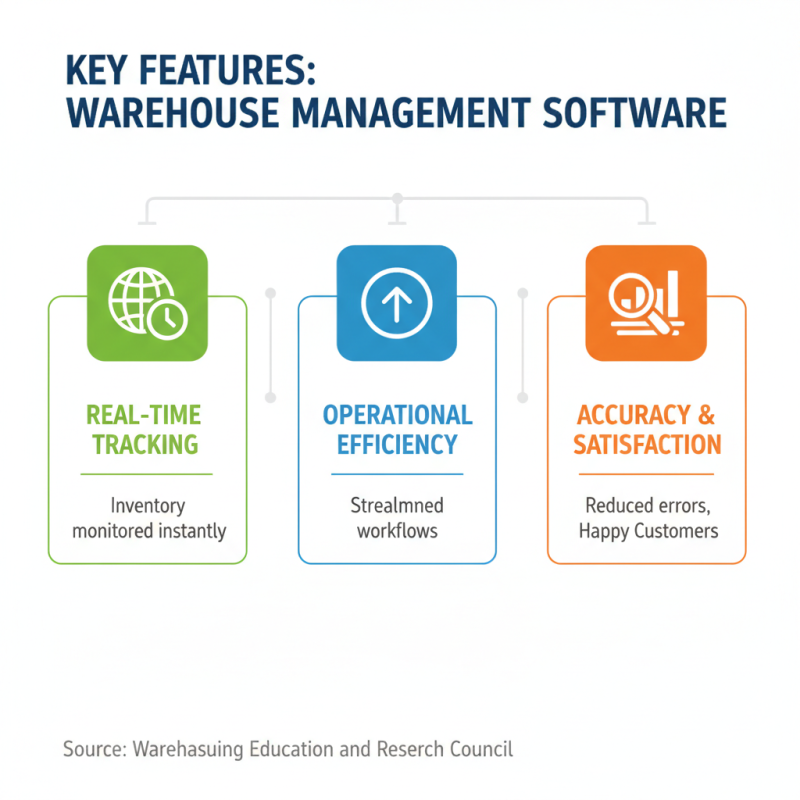
When selecting warehouse management software, focus on key features that enhance operational efficiency. Real-time inventory tracking is essential. A study by the Warehousing Education and Research Council found that companies with advanced tracking systems reduce stock discrepancies by 50%. This accuracy is crucial for maintaining customer satisfaction.
Integration capabilities are also critical. Well-designed software should seamlessly connect with existing systems, such as ERP and CRM. Reports indicate that businesses that integrate their warehouse management systems with other tools can boost productivity by up to 40%. This collaboration minimizes data entry errors and streamlines processes.
Moreover, user-friendly interfaces cannot be overlooked. Software should be intuitive to ensure that staff can adapt quickly. A complex tool can hinder workflow and create valuable time loss. Employee training becomes necessary, which may not always be feasible. Lastly, consider scalability. As businesses evolve, their software needs to grow too. Software that lacks this capability can impede development and increase operational costs. Balancing these features can enhance efficiency while addressing potential limitations.
Warehouse management systems (WMS) have become vital for improving efficiency. Utilizing a WMS can reduce operational costs by about 20%, according to industry reports. By automating tasks, these systems streamline processes like inventory management and order fulfillment. In doing so, they decrease errors and enhance accuracy in warehouse operations.
A strong WMS also provides real-time data. This allows businesses to make informed decisions quickly. A report by the Logistics Management Advisory Board reveals that companies using WMS experience a 30% increase in inventory accuracy. Improved visibility helps to minimize stock discrepancies. Moreover, customers receive their orders faster, improving satisfaction rates.
Tips: Regularly train staff on using WMS effectively. Engage in continual learning to adapt to updates. Analyze performance metrics to identify areas for improvement.
Despite these advantages, implementation can pose challenges. Organizations might face resistance from employees accustomed to old practices. It's crucial to foster a culture open to change. Additionally, integration with existing systems can be complex. Seek expert advice to navigate these hurdles.
| Tool Name | Key Features | Benefits | Typical Industry Use |
|---|---|---|---|
| Tool A | Inventory Tracking, Order Management | Increased Accuracy, Reduced Costs | Retail, E-commerce |
| Tool B | Shipping Integration, Analytics | Faster Processing, Better Insights | Manufacturing, Wholesale |
| Tool C | Barcode Scanning, Real-time Tracking | Enhanced Visibility, Reduced Errors | Logistics, Distribution |
| Tool D | Multi-location Support, Custom Reporting | Scalability, Tailored Solutions | Food and Beverage, Pharmaceuticals |
| Tool E | Automated Reordering, Forecasting | Improved Inventory Levels, Proactive Management | E-commerce, Retail |
| Tool F | Task Management, Workforce Planning | Efficiency Boost, Labor Cost Reduction | Manufacturing, Logistics |
| Tool G | Mobile Access, Cloud-Based Solution | Flexibility, Reduced IT Overhead | E-commerce, Retail |
| Tool H | Return Management, Customer Portal | Improved Customer Satisfaction, Streamlined Returns | Retail, E-commerce |
| Tool I | Pick and Pack Optimization, RFID | Faster Order Fulfillment, Minimization of Losses | Logistics, Distribution |
| Tool J | Supply Chain Integration, Bulk Order Management | End-to-End Visibility, Cost Savings | Manufacturing, Wholesale |
Warehouse management tools are essential for improving operational efficiency. These tools help manage inventory, streamline shipping, and optimize space. In fact, reports show that effective warehouse management can reduce operating costs by up to 20%. Companies often face challenges in selecting the right tools. An analysis of popular options reveals varying features and performance metrics.
For example, some tools excel in real-time tracking but may lack robust reporting features. A survey indicated that 35% of warehouse managers prioritize tracking capabilities. In contrast, reporting functionalities were ranked lower by 22% of respondents. A deeper look at user reviews highlights common pain points, such as integration issues and user interface complexity. Companies need to weigh these factors carefully before investing.
Additionally, the importance of scalability cannot be overstated. As businesses grow, their warehousing needs evolve. A tool that works well for a small operation might falter with larger volumes. According to industry studies, 48% of warehousing failures can be attributed to inadequate system scalability. This insight emphasizes the necessity of choosing tools designed for future growth.
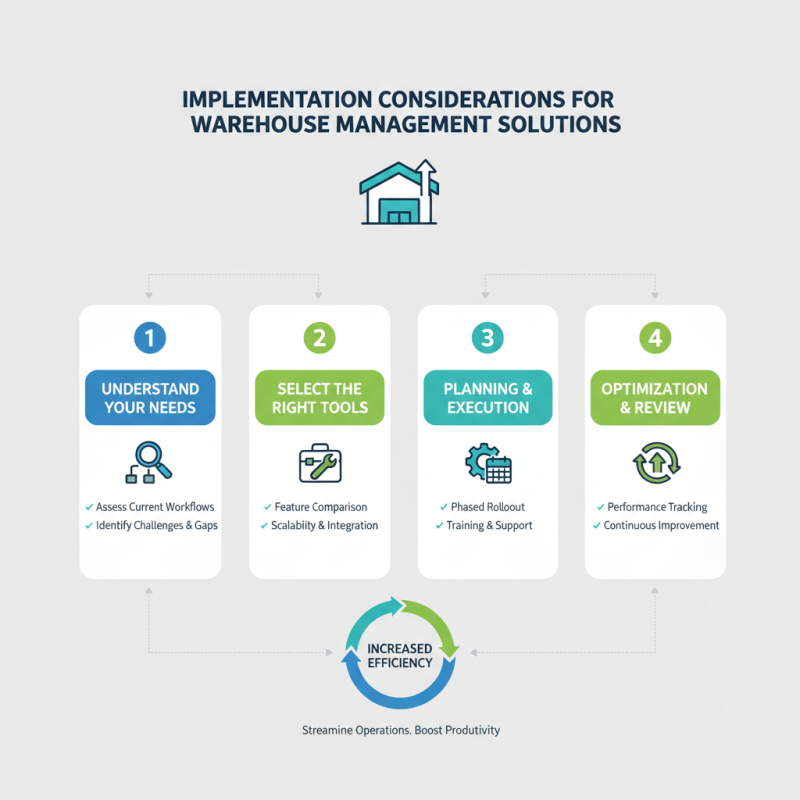
Implementing warehouse management solutions is a crucial step for improving efficiency. Various factors demand attention during this process. It starts with understanding your warehouse needs. Assessing current workflows is vital. What challenges does the team face? Are there specific areas that require more focus? Identifying these gaps can guide tool selection.
Another key consideration is integration with existing systems. Seamless connectivity can enhance real-time data flow. It’s important to evaluate compatibility with inventory systems and shipping platforms. Some tools may require extensive customization, which can lead to hidden costs. Prepare for possible disruptions during the transition phase. Planning for downtime can mitigate operational impacts.
Training staff on the new system cannot be overlooked. Employees must feel comfortable with the new processes. A supportive training program fosters adoption and minimizes resistance. Gathering feedback during this phase is essential. Assessing staff experiences can uncover unforeseen issues. Balancing technology and human factors will ultimately maximize warehouse efficiency.