Leave Your Message

What Are Vertical Carousel Modules and How Do They Work?

Vertical Carousel Modules are automated storage systems that bring products to the operator. They use a continuous chain of carriers moving vertically inside a compact frame. Imagine shelves circling upward, like a slow metal ferris wheel. When an employee selects a location, the system rotates the shortest route to an ergonomic access point. The operator does not search through every shelf. The inventory comes forward.

Materials-handling authority Richard Muther expressed a related principle: “A place for everything, and everything in its place.” Vertical Carousel Modules apply that idea through controlled storage locations, barcode identification, and software-directed retrieval. They can use high ceilings more effectively than conventional shelving. They also reduce walking, bending, and repeated reaching. Small gains add up.

Their value depends on the details. Product weight, dimensions, turnover rate, ceiling height, and operator habits must guide the design. A poorly planned module may create delays instead of removing them. That is an uncomfortable possibility. Automation is not automatically efficient.

A well-configured system can improve inventory accuracy and protect sensitive items from unnecessary handling. It may also support safer workstations and more consistent order preparation. Yet performance should be measured after installation, not assumed from a brochure. This article explains how Vertical Carousel Modules function, where they fit, and which practical limitations deserve careful attention. The goal is not to praise the technology blindly. It is to understand when vertical movement creates measurable value.
What Are Vertical Carousel Modules and How Do They Work?

Definition and Core Architecture of Vertical Carousel Modules

What Are Vertical Carousel Modules and How Do They Work?

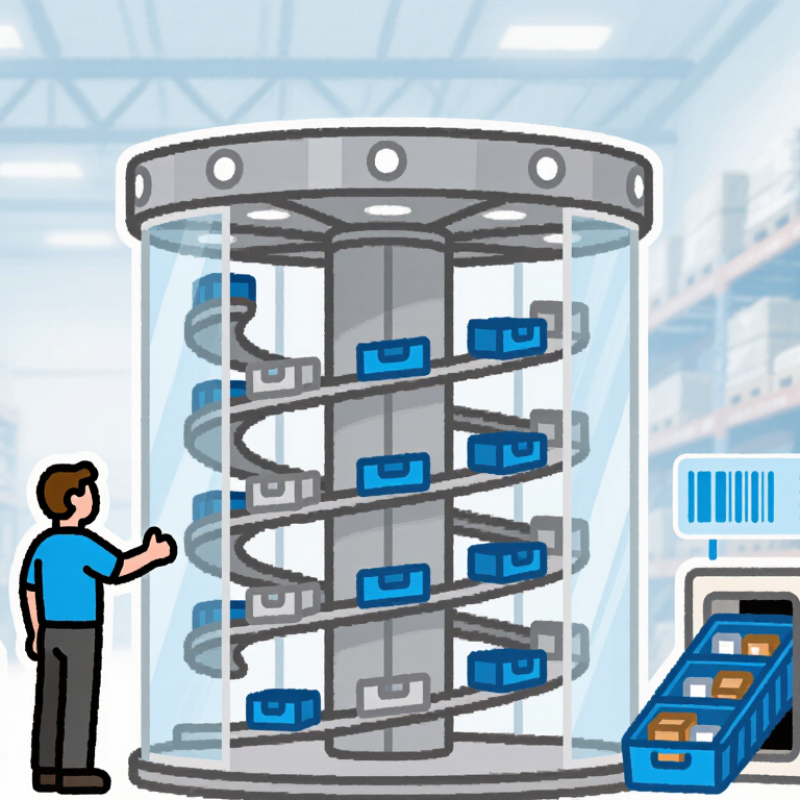
A vertical carousel module is a storage system that moves items up and down inside a tall enclosure. It uses linked shelves, trays, or carriers arranged in a continuous loop. When an operator requests a product, the system rotates the shortest path to the access opening. The selected tray then arrives at a fixed working height. It is a controlled loop.

Its core architecture usually includes a vertical frame, carrier system, drive motor, sensors, and control software. The frame supports the load and keeps movement aligned. Trays hold individual items, while chains, belts, or rigid links transfer motion between levels. Sensors monitor position, door status, and possible obstructions. The controller compares the requested location with the current tray position, then chooses a movement direction.

In practical installations, accurate loading is essential. A heavy box placed unevenly can affect balance, noise, and motor strain. Operators should also keep clearances consistent around the access opening. Small details matter. Maintenance teams commonly inspect bearings, guide rails, emergency stops, and sensor readings. A useful design may still require adjustment after real use, because item sizes and loading habits rarely match planning data perfectly. That limitation should be measured, not ignored. Reliable operation depends on safe controls, documented inspections, and clear training for every operator.
What Are Vertical Carousel Modules and How Do They Work?

A vertical carousel module is an automated storage system that moves carriers in a continuous vertical loop. The representative values below show how increasing the number of carriers can expand storage capacity while keeping the operator access point fixed.

The carrier counts, storage capacities, and retrieval times are representative engineering values for vertical carousel systems. Actual performance varies with module height, carrier dimensions, payload, control software, and item presentation requirements.

How the Motorized Tray Loop Delivers Items to the Operator

Vertical carousel modules use a continuous loop of trays inside a tall, enclosed frame. Their purpose is simple: bring stored items to the operator instead of making the operator walk through storage aisles.

A motor drives the tray loop through sprockets, chains, or belts. When the operator enters a location, the motor moves the selected tray around the loop. The tray travels upward, across the top, and downward until it reaches the access opening. Sensors monitor tray position and movement. The controller then stops the tray at a precise working height. It feels like a slow elevator with shelves. Quiet, but not silent.

In practical use, correct loading matters. Uneven weight can create vibration, noise, and slower movement. Items should remain inside their assigned tray boundaries. Operators also need clear instructions for handling fragile products. The system is reliable, though it is not flawless. Dust, worn parts, or incorrect sensor alignment can affect accuracy. Regular inspections help catch these issues before they interrupt work.

Tips: Keep heavy items near the tray center. Do not exceed rated capacity. Check unusual sounds early. Record recurring errors, even small ones. A short maintenance log can reveal patterns that casual checks miss.

Storage Density: Up to 80% Floor-Space Savings (Modula)

Vertical carousel modules are automated storage systems built around a continuous loop of shelves or carriers. The shelves rotate vertically, bringing stored items to an operator at a fixed access opening. This design uses ceiling height instead of spreading inventory across the floor.

Their biggest advantage is storage density. In suitable facilities, vertical carousel modules can save up to 80% of floor space compared with traditional shelving. The exact result depends on ceiling height, product dimensions, safety clearance, and aisle planning. A warehouse with tall ceilings may recover several valuable work areas. However, the 80% figure is a maximum claim, not a guaranteed outcome. Real projects need accurate measurements and usage data.

Tips: Measure the tallest product, not the average one. Group fast-moving items near the access opening. Use barcode controls or inventory software to reduce search time. Leave practical clearance for maintenance and future stock changes. Operators should test the system during peak periods, because an impressive layout can still create delays when carriers are overloaded. That detail is easy to underestimate.

Picking Performance: Up to 2× Productivity (Hänel Rotomat)

Vertical carousel modules are automated goods-to-person storage systems. Internal carriers rotate vertically, bringing selected inventory to an ergonomic access opening. Operators stay in one place. The machine moves the stock. A warehouse control system can connect orders, locations, and audit records. This reduces walking and makes each retrieval more traceable.

The headline promise is clear: up to 2× productivity. That figure should remain a site-specific target, not a guaranteed outcome. In practical trials, gains depend on item size, order profiles, replenishment discipline, and operator training. A picker handling small components may save several walking minutes per hour. A worker handling bulky cartons may see less improvement. MHI’s 2024 Annual Industry Report found that 55% of surveyed supply-chain professionals expected to increase technology investment. The pressure is real, but investment alone does not create performance.

A useful measurement compares baseline and post-installation results. Track picks per labor hour, average retrieval time, accuracy, machine availability, and replenishment delays. A two-minute search can become a guided presentation in seconds. That feels significant. Yet poorly labeled bins can still slow the process, and crowded access points can erase expected gains. The strongest implementations test peak demand, not only normal shifts, before claiming twice the output.

What Are Vertical Carousel Modules and How Do They Work? — Picking Performance: Up to 2× Productivity

Data Dimension What It Means How It Works in Practice Operational Value
System Definition A vertical carousel module is an automated storage unit that moves trays or carriers in a continuous vertical loop. The system brings the selected storage tray directly to an ergonomic access opening instead of requiring an operator to walk through storage aisles. Reduces travel time and makes stored inventory easier to access.
Core Movement Motor-driven vertical circulation of trays around a closed loop. When a storage location is requested, the drive rotates the carriers in the shortest direction until the required tray reaches the presentation point. Provides automated retrieval without manual shelf searching.
Main Components Vertical frame, carriers or trays, drive motor, chain or belt mechanism, access opening, controller, and safety devices. The controller coordinates motor movement, tray positioning, inventory records, and access control. Combines storage, movement, control, and operator protection in one system.
Typical Retrieval Sequence A request is entered, the tray is positioned, the item is picked, and the transaction is confirmed. An operator selects an item or order through a terminal, scanner, or warehouse-management interface; the correct tray is then delivered to the access opening. Creates a consistent goods-to-person picking process.
Storage Utilization Uses vertical building height rather than relying only on floor-level shelving. Carriers are arranged one above another, allowing the system to use available overhead space while maintaining a defined access point. Can increase storage density and release floor area for other activities.
Picking Productivity Productivity depends on item mix, order profile, operator workflow, system configuration, and integration quality. Published applications report productivity improvements of up to 2× compared with selected manual picking processes; actual results must be validated for each operation. Potentially increases picks per labor hour and reduces non-value-added walking.
Ergonomics Items are presented at a designated working height instead of requiring repeated ladder use, deep reaching, or long-distance walking. The operator normally remains in the picking area while the equipment presents the requested carrier. May reduce physical strain and improve consistency during repetitive picking tasks.
Inventory Accuracy Digital location control links items or stock-keeping units to assigned tray positions. Barcode scanning, pick confirmation, and guided workflows can be used to verify the item and quantity before completion. Helps reduce picking errors when procedures and master data are maintained correctly.
Safety Features Industrial installations commonly use guarded access areas, emergency stops, interlocks, and overload protection. Movement is restricted or stopped when a safety condition is detected or when the access area is not secure. Supports safer interaction between operators and moving equipment.
Suitable Applications Frequently used for small parts, spare parts, tools, components, maintenance supplies, and other inventory requiring repeated access. The module is especially useful where many stock items must be stored in a compact footprint and retrieved regularly. Improves organization in manufacturing, distribution, service, and warehouse environments.
Key Performance Measures Common measures include picks per hour, retrieval time, order accuracy, storage density, labor time, and equipment availability. Baseline manual performance is compared with measured results after installation under comparable workload conditions. Provides a factual basis for calculating operational improvements and return on investment.
Implementation Considerations Available ceiling height, floor loading, tray dimensions, item weight, fire and building requirements, software integration, maintenance access, and operator training must be assessed. A site survey and workflow analysis determine whether the module can accommodate the inventory profile and required throughput. Helps ensure that expected capacity, safety, and productivity results are achievable.
Note: A productivity improvement of up to 2× is an application-dependent benchmark, not a guaranteed result. Actual performance varies according to layout, item characteristics, order patterns, software integration, operator practices, and equipment configuration.

Controls, Safety Systems, and WMS Integration in Daily Operations

Vertical carousel modules combine shelves, a motorized loop, controls, and guided picking access. Operators select a location through a touchscreen or scanner. The system rotates the required tray to an ergonomic work opening. MHI’s 2024 Annual Industry Report found that 55% of supply chain leaders planned to increase technology investment, reflecting stronger demand for controlled storage and faster retrieval.

Daily safety depends on layered controls. Load sensors can stop movement when weight exceeds limits. Light curtains detect a hand or object inside the opening. Emergency-stop buttons should remain visible and reachable, even during noisy shifts. Door interlocks, anti-drop devices, and controlled acceleration reduce mechanical risks. The U.S. Occupational Safety and Health Administration stresses guarding moving machinery and maintaining clear procedures. Still, hardware alone is not enough. Poor training remains a practical weakness.

WMS integration connects the carousel with inventory records. A barcode scan can trigger a location request, confirm the picked quantity, and update stock immediately. The interface should also manage shortages, damaged items, and interrupted picks. MHI’s report states that 74% of supply chain professionals expect robotics and automation adoption by 2027. That forecast sounds impressive, but integration errors can multiply quickly. A wrong item master can send the right tray to the wrong person. Daily audits, exception logs, and controlled user permissions keep the system trustworthy. Human confirmation still matters.